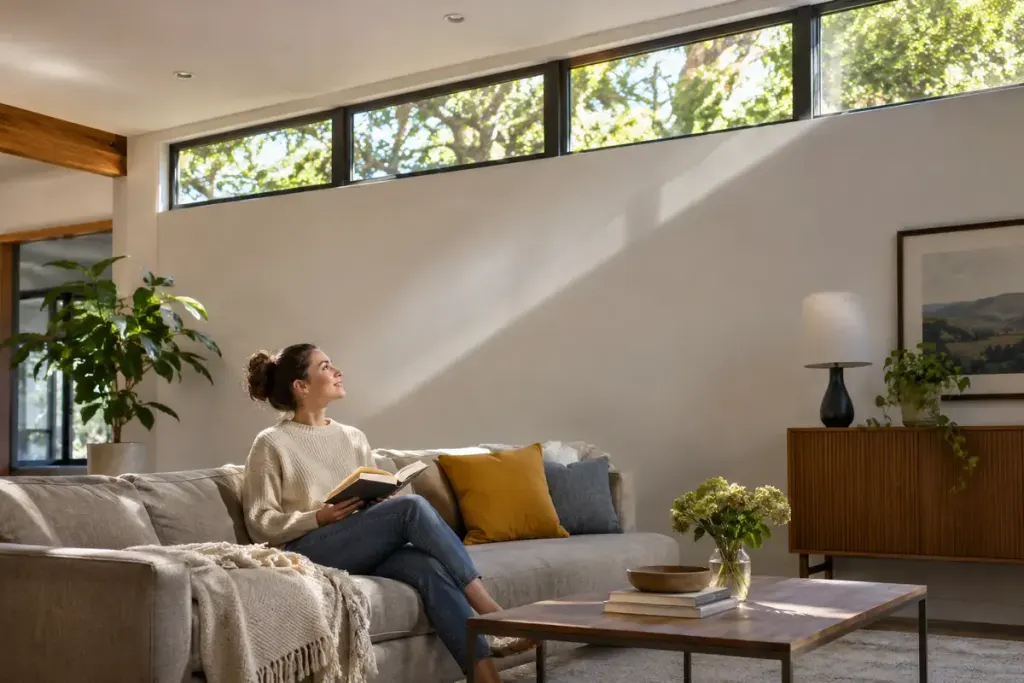
A room can feel bright even when its main wall offers little of a view. Look higher: clerestory windows sit above the usual eye-level window zone, often in a band near the roof. They can bring daylight deeper into a space while leaving a lower wall available for furniture or privacy.
That is an architectural opportunity, not a promise of comfortable light at every hour. The US Department of Energy’s daylighting guidance explains how orientation, climate and shading affect the usefulness of natural light. A high window still admits solar energy, and its height does not make glare disappear.
Visit with the room’s actual use in mind
Stand where a desk, television or dining table would go. Notice whether the bright window falls directly in your field of vision, reflects in a screen, or lights the ceiling pleasantly. Ask which direction the glazing faces and whether the agent’s photographs were taken at a different time of day.
For example, a room that looks beautifully even on an overcast morning may have a bright strip across the working area later. A second viewing or information from the occupier can help you ask a more specific question; one visit cannot establish year-round performance.
Separate daylight from ventilation
Check whether the units are fixed or opening. If they open, ask how they are operated and reached, and see the control demonstrated where appropriate. Do not assume an inaccessible-looking window is automated, or that a high opening will replace the home’s designed ventilation system.
- How are the glass and frames cleaned safely?
- Are blinds, shading or operating parts included?
- Is there information about the glazing specification and installation?
- Can a surveyor inspect the surrounding roof and window junction?
Record any staining or damaged finishes without diagnosing their cause from appearance alone. A high-level leak can be hard to assess from the floor. The most useful viewing note is therefore a concrete observation—where the mark sits and what access exists—followed by a request for documents or professional inspection.