
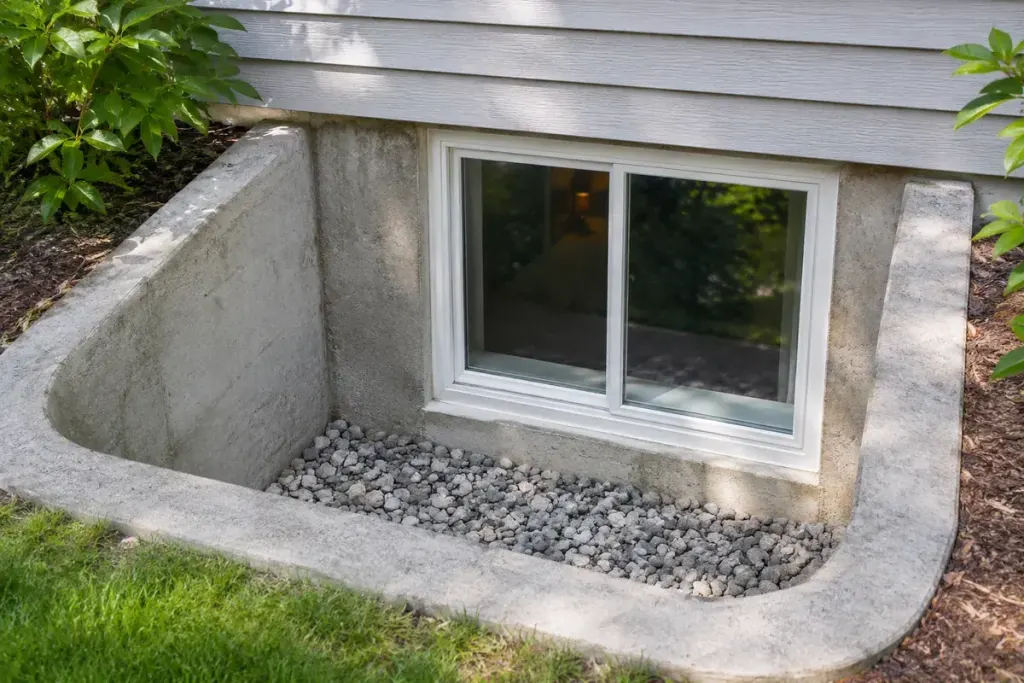
A basement room can look bright in a listing photograph because a lightwell brings daylight down beside the window. During a viewing, that outside space deserves a look of its own. The photograph cannot tell you where rainwater goes, who clears fallen leaves or whether the window is intended to provide an escape route.
Treat the lightwell as part of the room’s surroundings rather than an attractive detail that ends at the glass.
Look from both sides, where access is safe
From inside, note what the window actually faces and whether it opens. From the accessible outside area, look for debris, standing water, damaged covers and signs that soil or planting has been raised against the structure. Do not climb into a confined well or move a heavy cover to investigate.
An observation is not a diagnosis. Damp marks might have several explanations, and a dry well on a sunny afternoon does not prove that it drains well in a storm. Record the location and ask for the maintenance history.
Ask a chain of practical questions
- Where is water intended to drain, and when was that route last checked?
- Who can access the well to remove leaves or litter?
- Is a cover removable, fixed or shared with another property?
- Has the window, well or basement layout been altered?
- Are there drawings, approvals or inspection records for those alterations?
For a leasehold or shared building, “the management company handles it” is a starting answer. Ask which part of the work it covers and how a resident reports a blockage. A small inaccessible space can create a surprisingly awkward maintenance job.
Separate daylight from permission to use the room
A room having a window does not, by itself, establish that it can legally or safely be used as a bedroom. Escape arrangements, ventilation, dimensions and other requirements depend on the location and the building. Have the intended use and the relevant records reviewed by a qualified local professional.
For example, a buyer planning a home office might care most about daylight, ventilation and a reliable drainage route. A buyer planning overnight accommodation needs a different set of checks. Say what you intend to do with the room before asking whether the existing arrangement is suitable.
Add a photograph and the unanswered questions to your viewing notes. That gives a surveyor or adviser a specific feature to investigate, instead of a vague instruction to “check the basement.”