
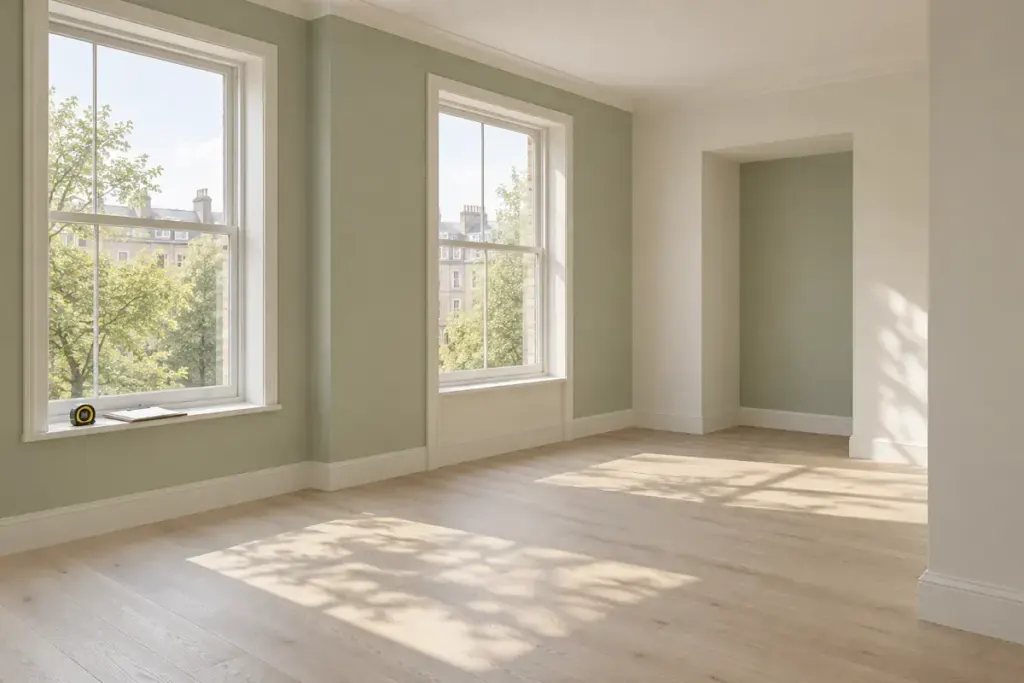
A bright living room makes an immediate impression. The route from the front door to the kitchen may matter more after a long day carrying shopping. A useful viewing makes space for both reactions.
This is a practical observation exercise for a viewing, not a structural inspection or a recommendation to buy. Ask permission before opening cupboards, measuring or taking photographs, and follow the seller’s or agent’s instructions.
Choose three routes from your own life
Try arrival to kitchen, bedroom to bathroom, and laundry to drying or storage space. If you work from home, include the place a desk would occupy. If mobility access matters, measure the relevant clearances and seek appropriate professional advice rather than relying on a quick impression.
Walk at a normal pace. Notice doors that swing into a route, narrow corners and storage that would require moving other objects. An empty room can disguise the space furniture will use.
Bring dimensions for what you already own
A tape measure is more useful with a short list beside it. Record the width and depth of essential furniture before leaving home. Include clearance for drawers and doors, not just the object’s footprint. Check access routes as well as the destination room.
A sofa fitting against a wall does not establish that it can pass through the entrance. Measurements taken during a viewing should be confirmed before ordering furniture or making an irreversible decision.
Keep observation separate from explanation
| What you noticed | A question to follow up |
|---|---|
| A mark near a window | What caused it, and is there documentation of any repair? |
| A room felt dim during the visit | What direction does it face, and can you visit at another time? |
| Storage looked limited | Which belongings need a permanent place, and where would they go? |
A mark is not a diagnosis. A quiet ten-minute visit is not proof that a street is always quiet. Write what you actually observed and who can answer the remaining question.
Do the financial and professional checks separately
The CFPB’s home-search guidance reminds US buyers to consider costs and inspection arrangements alongside the search itself. Contracts, inspections and local requirements differ by country; a walkthrough does not replace qualified local advice.
Immediately after leaving, record one strength, one compromise and one unresolved question. Then use the same format at the next viewing. You will have a more reliable comparison than a collection of room photographs with no explanation of why they mattered.