
The word “registered” does not make every property title identical. In England and Wales, the register can show different classes of title. If a property is registered with possessory title, a buyer should understand why that class was granted and what questions remain.
This explanation concerns England and Wales. A similarly worded document in another country may operate under entirely different rules.
Read the class, not just the owner’s name
HM Land Registry’s guidance on upgrading title explains that different registered classes can be upgraded where the relevant requirements are met. Possessory title can arise where the evidence supporting ownership does not justify the fullest class at registration. Its meaning should be considered with the actual register and supporting history.
It does not automatically mean that the current seller is dishonest, nor that a lender will accept the property without further questions. Those are separate assessments.
Build a document-based conversation
Before committing, ask your conveyancer to explain:
- Which part of the property has possessory title: the whole site or only a separate parcel?
- When and on what basis was that title registered?
- What evidence is available about possession and earlier ownership?
- Do restrictions, rights or competing interests require additional investigation?
- What does the proposed lender require in this particular transaction?
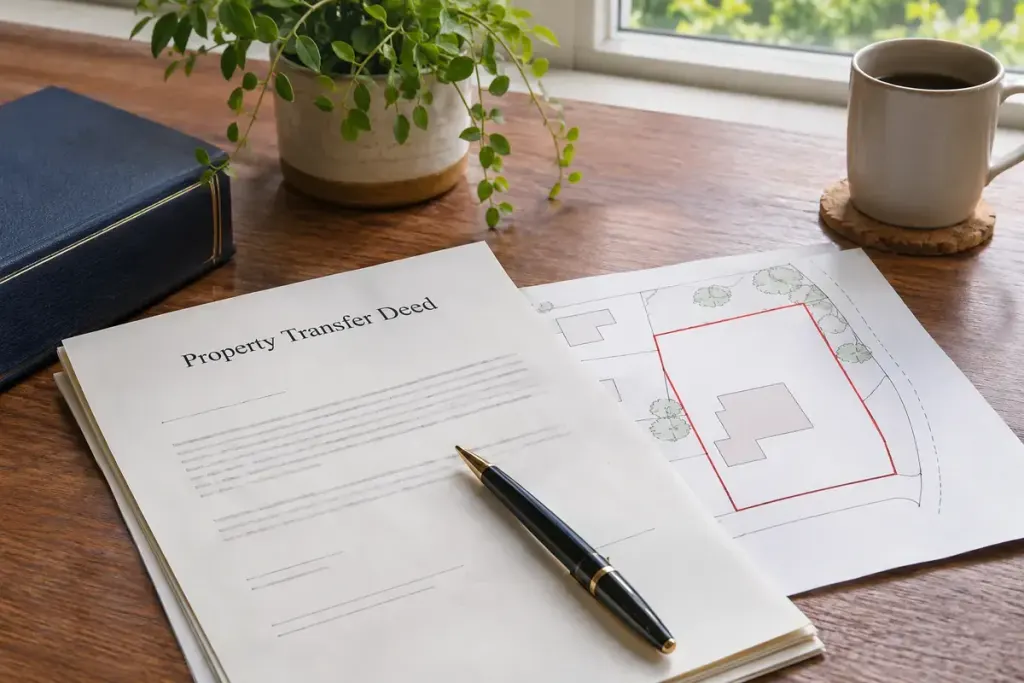
For example, a house and a narrow strip beside its driveway might have separate title numbers. A description of the house alone may leave the buyer unaware that the strip has a different history. Ask for the parcels to be explained against the plan rather than assuming one answer covers everything.
An upgrade is an application, not a slogan
The legal framework includes section 62 of the Land Registration Act 2002. Eligibility and evidence need checking for the circumstances; an estate listing’s claim that an upgrade will be easy is not the decision itself.
Have your conveyancer set out the unresolved issue, possible next steps and implications for your purchase in writing. This is general document literacy, not a determination that any individual title is safe to buy.