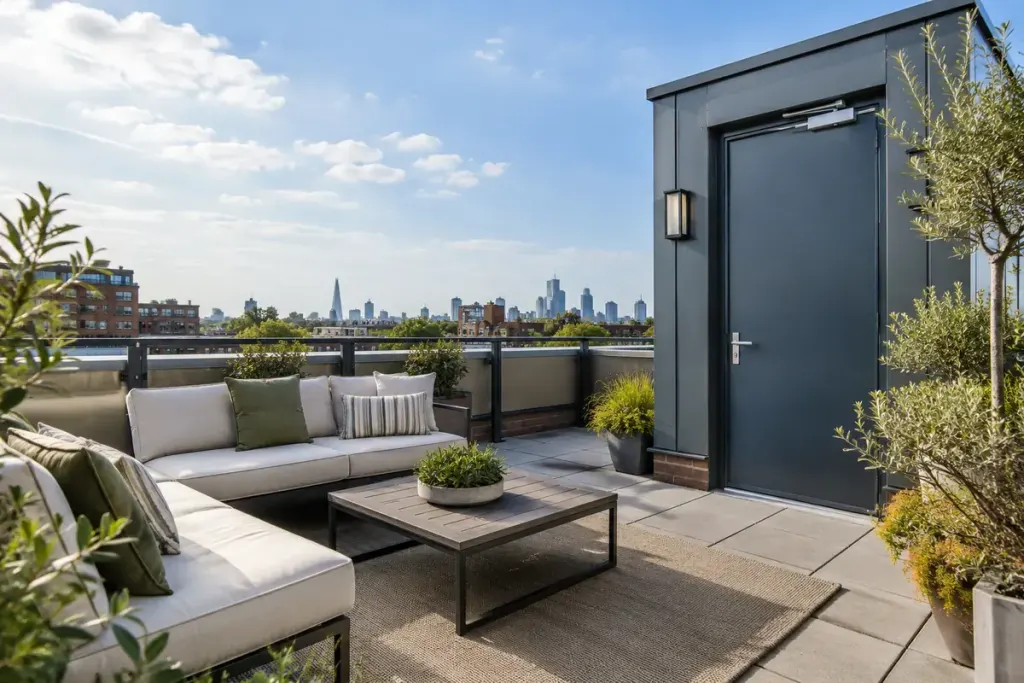
A roof terrace can be the most memorable photograph in an apartment listing. Yet the useful question is not simply whether the building has one. It is whether the buyer can use it in the way the photograph suggests.
During the viewing, ask to walk the actual route from the flat to the terrace. A lift that stops one floor below, a heavy final door or a separate key system may matter more to everyday use than the view. Assess the route against the needs of the people who will live there.
Find the rules behind the photograph
Request the current written arrangements for access, opening hours, guests and bookings. Check whether the space is genuinely shared, reserved for certain units or sometimes hired for private functions. Marketing wording should be checked against the property’s governing documents by the appropriate local professional.
Ask how closures are communicated. Maintenance, severe weather or a building issue may temporarily prevent use. A sensible answer identifies who makes that decision and how residents receive updates, rather than promising uninterrupted access.
For a practical example, someone who imagines eating outside after a late shift should compare that routine with the closing time. A family expecting to host visitors should read the guest rule before treating the terrace as an extension of their own living room.
Include upkeep in the conversation
Who maintains the furniture, planting, drainage and doors? Ask how the relevant costs are allocated and whether planned works appear in the building’s records. Avoid inferring structural condition from tidy cushions or fresh paint.
Where details are uncertain, record the question and request a documented answer before relying on the amenity in a purchase decision. Local ownership and building-management rules vary, so this checklist is a viewing aid rather than a legal interpretation. An attractive shared space becomes a meaningful benefit when its access and responsibilities fit the life you expect to lead.