
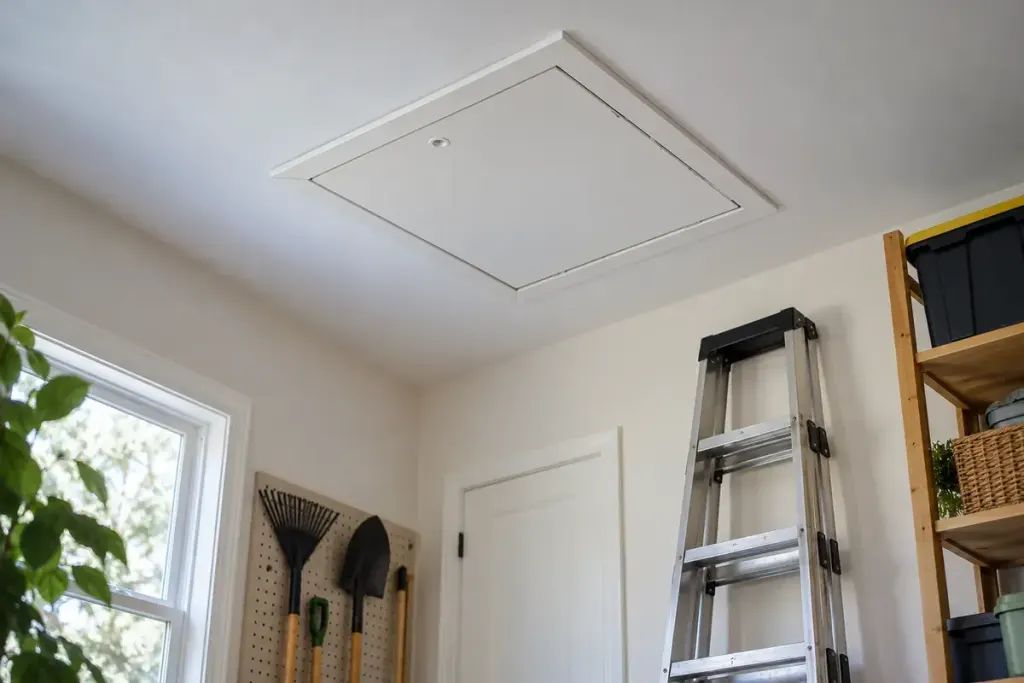
An inspection report says the attic was viewed from the hatch. That is not the same as saying the inspector walked through every part of the roof space. Before treating a quiet report as reassurance, read how much of the area could actually be examined.
Ask what limited the inspection
The access opening may be small, the hatch may be obstructed, or safe footing may be unavailable. Stored belongings and insulation can hide surfaces. Ask the inspector to explain the specific limitation, which observations were possible and which questions remain unanswered.
Do not climb into an unfamiliar attic to fill the gap yourself. Ceiling materials may not support a person, and concealed wiring, sharp objects or unstable access equipment can add risks. Access arrangements and any specialist investigation belong with appropriately qualified people.
Separate a finding from an absence of evidence
“No visible staining from the hatch” is a narrower observation than “the roof has never leaked.” Similarly, an area that was not visible cannot be described as checked simply because photographs show another part of the space.
In an invented purchase example, a report identifies no visible defect near the entrance but cannot see the far eaves. The next question is whether further access or a specialist assessment is needed before the buyer makes a decision. The answer depends on the property, other evidence and the professional’s advice.
Make the follow-up specific
Ask the seller or agent about permission, practical access and relevant repair records. If another visit is arranged, confirm what will be inspected and whether the original limitation can safely be resolved. Moving a stack of boxes may improve visibility; it does not automatically make a fragile surface safe to walk on.
Keep the response with the inspection report rather than relying on a verbal assurance during a busy viewing. Local inspection standards, contracts and buyer remedies vary, so obtain local professional advice where the decision has financial or legal consequences.
A useful report tells you both what was observed and what could not be observed. Understanding that boundary gives you a better question to ask before committing to the home.