
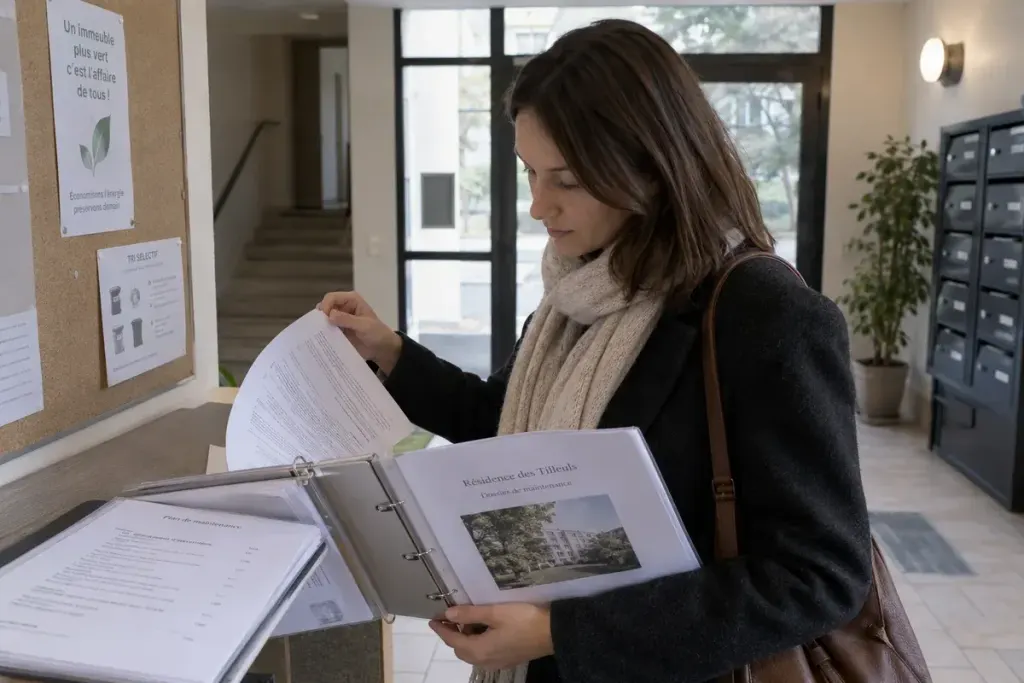
The apartment fits your furniture and the purchase price fits your budget. Yet the roof, lift, entrance and shared plumbing belong to a larger financial story. Buying the private space may also mean taking on obligations connected with those shared parts.
Those arrangements differ between leasehold, condominium, strata and other ownership systems. Before comparing buildings, establish which system applies and ask a qualified local adviser to explain the documents that govern it.
Ask for records, not a reassuring monthly figure
A current service charge or association fee tells you what is being collected now. It does not, by itself, explain the building’s condition, future projects or unpaid contributions. Request the relevant recent accounts, budget and planned-maintenance information through the proper purchase process.
The Leasehold Advisory Service’s guide for flat buyers discusses service charges, reserve funds and planned major works in its jurisdiction. It is useful background for the kinds of questions to raise, not a substitute for the law and documents applying to a property elsewhere.
Connect a project with its funding
Imagine a building that expects to replace a lift. Useful questions include whether the work is merely being discussed, professionally assessed, approved or contracted; what funding exists; and how any remaining cost would be allocated. “There is a reserve fund” does not answer all of those questions.
Likewise, a low current charge is not automatically good news. It could reflect efficient management, a different service level or spending deferred to another year. A higher charge may include services another building bills separately. Compare the contents, not only the totals.
Keep technical and legal questions separate
A surveyor can help assess relevant physical condition within the scope of their inspection. A conveyancer or other appropriate local professional can explain obligations, restrictions and the purchase documents. Ask what each review includes and what remains outside it.
Keep a simple list with three columns: question, evidence received and unresolved point. For example, a brochure statement about “recent refurbishment” should lead to a question about what was actually done and when, rather than an assumption that every shared element was renewed.
Resolve material uncertainties before committing. The aim is not to find a building with no future maintenance. It is to understand the shared responsibilities well enough to judge the apartment as a continuing commitment, not just a set of rooms.