
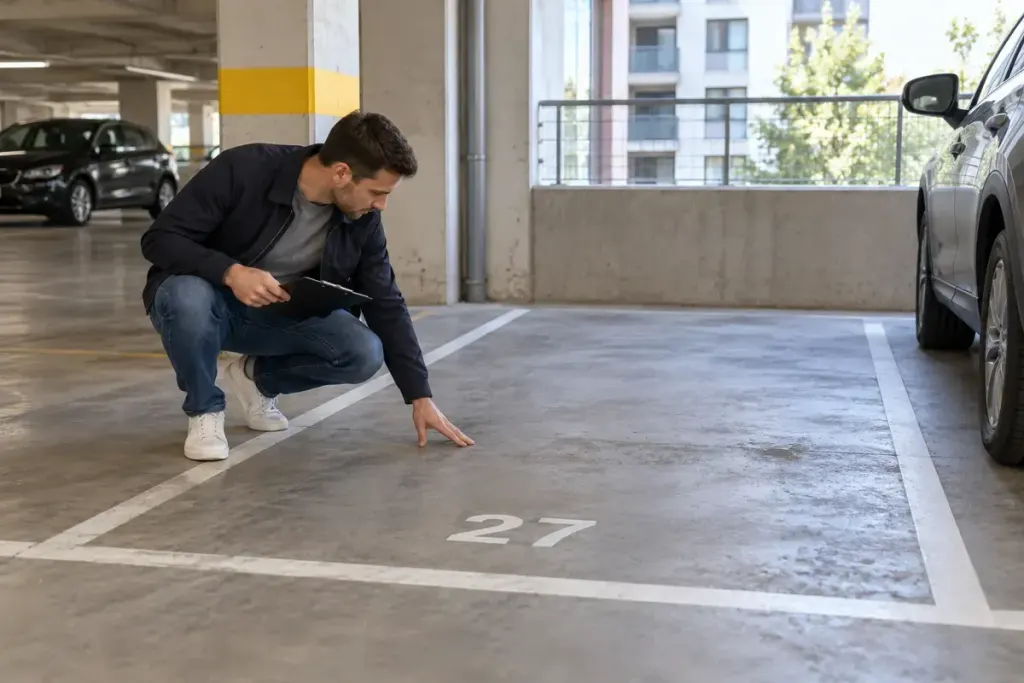
Parking included sounds reassuring until you discover that the space sits behind a difficult ramp or cannot be used independently of another vehicle. A number on a property listing does not explain how the space works on an ordinary evening.
Ask to see the actual bay, not a similar one. Match its number and location to the documents supplied for the property. Clarify whether the arrangement is assigned use, a separate agreement or something else, and have the relevant terms checked before committing.
Test the route as well as the rectangle
Measure the bay if permitted, but also consider the entrance, turning space, pillars and door-opening clearance. A vehicle can fit between painted lines and still be awkward to get into. Check posted height restrictions against your vehicle, including anything carried on its roof.
If a viewing with the vehicle is possible, arrange it properly with the building representative. Do not assume that an open gate permits access or that a visitor bay can be used as a test space.
- How are access devices issued and replaced?
- Can the bay be used for storage, charging or a different vehicle type?
- What happens when maintenance blocks the entrance?
- Are there recurring charges beyond the advertised property cost?
Write down the exceptions
A tandem arrangement may require another person to move a car. A mechanical parking system may have operating limits and a maintenance procedure. Ask for the conditions relevant to the particular space rather than assuming every building follows the same rules.
Keep written answers with the listing and agreement. Local property and tenancy arrangements differ, so a viewing checklist cannot establish legal ownership or rights. It can, however, reveal the practical questions that deserve an answer before parking becomes part of your decision.