
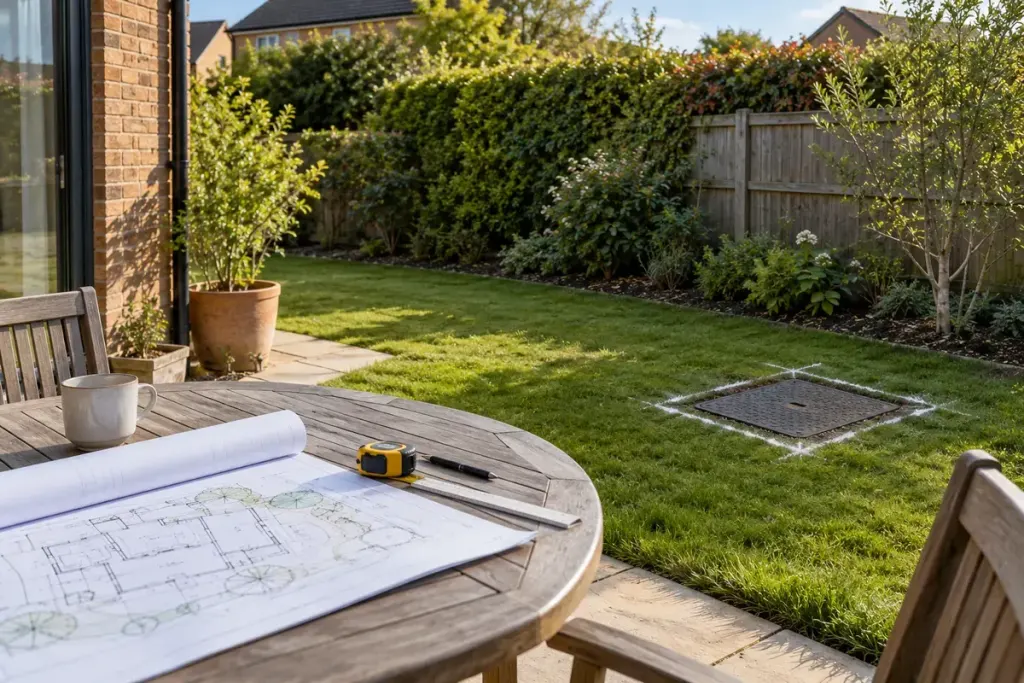
A generous garden can make a property look perfect for a future extension. But open space on a viewing is not the same as land on which every structure is permitted. A utility easement may give another party rights to use part of the property for equipment, access or maintenance.
The exact rights come from the relevant documents and local law. An easement is not automatically a public footpath, and it does not necessarily mean the utility owns the land outright. For a buyer, the practical question is how those rights affect the intended use of the space.
Put the proposed project on the plan
Ask the seller’s representative and your property professional for the recorded easement documents and a plan that identifies the affected area. Then show where you hope to place the extension, shed, fence, driveway or landscaping. A verbal assurance that there is plenty of room does not resolve a conflict with a recorded right.
Xcel Energy’s transmission right-of-way guidance distinguishes land held through an easement from a right-of-way that the utility owns outright. This is an example of one utility’s transmission arrangements, not a universal rule for every water, drainage or electricity easement.
Ask who can approve an encroachment, whether approval must be written, and whether access has to remain available for vehicles or maintenance crews. Check how the boundary of the easement was established. A lawn, hedge or existing fence may not accurately mark it.
Resolve the uncertainty before relying on the space
Keep three issues separate: ownership, the utility’s rights, and planning or building approval. Permission from one body does not necessarily settle the other two. If a planned structure is central to the purchase, obtain advice from the relevant utility and a qualified local property professional before committing on the assumption that it can be built.
A useful viewing note is specific: “Proposed garage overlaps the area shown on document X; written clarification pending.” That gives the decision a clear next step. It is much more reliable than recording that the garden simply looked large enough.