
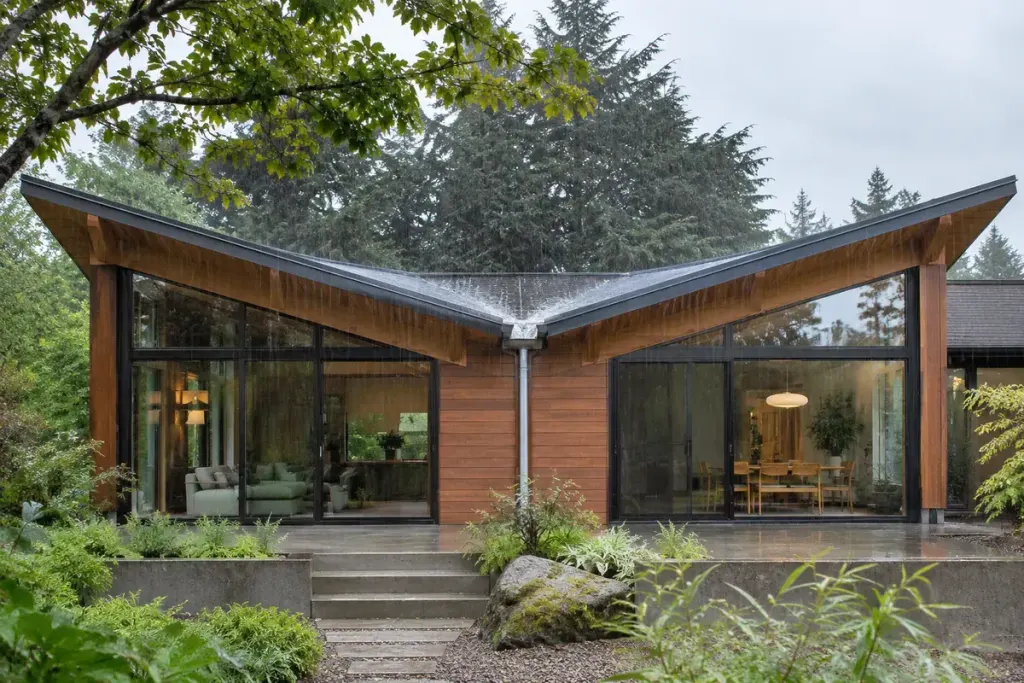
A butterfly roof reverses the familiar pitched-roof silhouette. Its two sides rise toward the outside edges and meet at a lower central valley. The shape can create striking high windows, but it also makes the middle of the roof an important place to understand during a property viewing.
Water follows the slopes toward that low point. The useful question is not whether the roof looks modern; it is how the building collects and safely discharges the water that arrives there.
Follow the proposed water route
The Architects Registration Board of Victoria’s material on drainage for low-pitched metal roofs discusses box gutters, sumps and overflow provisions. It is an Australian professional reference, not a universal specification for every butterfly roof. Its practical lesson for a buyer is to look at the drainage arrangement as a connected system.
Ask the seller or agent for the roof drawings and available maintenance records. Where does the central valley drain? Which parts are concealed? How is overflow handled if the normal outlet cannot cope? Where can a qualified inspector examine the components safely?
A downpipe visible on the wall answers only one part of that story. It does not show whether an internal gutter is clear, correctly detailed or accessible for maintenance.
Turn observations into inspection questions
From ordinary accessible areas, note staining at ceiling junctions, recent isolated repainting, or a history of leaks mentioned in the property documents. None proves a particular defect, but each gives an inspector a specific place or history to investigate.
For example, instead of writing “roof seems fine”, record “seller reports a valley repair three years ago; request invoice and ask inspector to assess that area”. This separates a seller’s statement from a verified condition.
A viewing is not an invitation to climb onto the roof or remove access panels. Ask an appropriately qualified professional to assess the actual construction and applicable local requirements. Before committing to the property, you want a clear maintenance route and evidence about its condition, as well as a silhouette you enjoy looking at.