
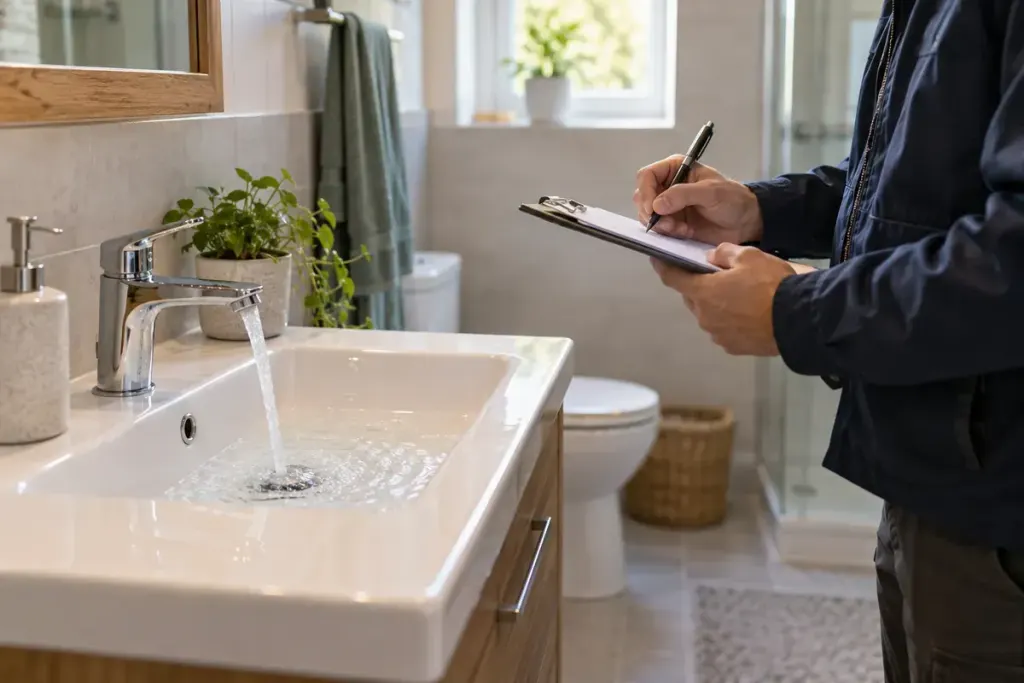
The bathroom looks newly decorated, but the tap produces only a modest stream. That observation is worth recording. It is not enough to decide whether the property has poor supply pressure, a restricted fitting or a temporary issue.
Ask permission before operating fixtures during a viewing. A property may have its water turned off, an appliance under repair or a specific instruction from the owner. Do not adjust valves or dismantle anything to investigate.
Describe what you can actually observe
Note the fixture, whether you used hot or cold water, and what happened. “The upstairs cold tap had a weak flow during the viewing” gives an inspector a useful question. “The house needs new pipes” is a conclusion you cannot establish from that brief check.
Flow at an outlet and water pressure are related but different measurements. The tap’s design, local restriction and other demand can influence what you see. A qualified inspector or plumber can advise what testing is appropriate.
- Ask whether the behaviour is usual or recent.
- Request information about known leaks or plumbing repairs.
- Check whether relevant work has documentation.
- Include the observation in the inspection brief.
Follow the answer through
If the seller says a fitting is awaiting replacement, ask how that will be documented and verified. If access prevented a check, record that limitation rather than marking the system satisfactory.
For an invented example, one weak tap alongside normal flow elsewhere may suggest a different investigation from several outlets behaving similarly. Neither pattern tells a buyer the cause without further assessment.
A viewing should help you decide what needs closer examination. Keep a short list of unresolved questions and discuss it with the professionals supporting the purchase before relying on an assumption about repair cost or building condition.