
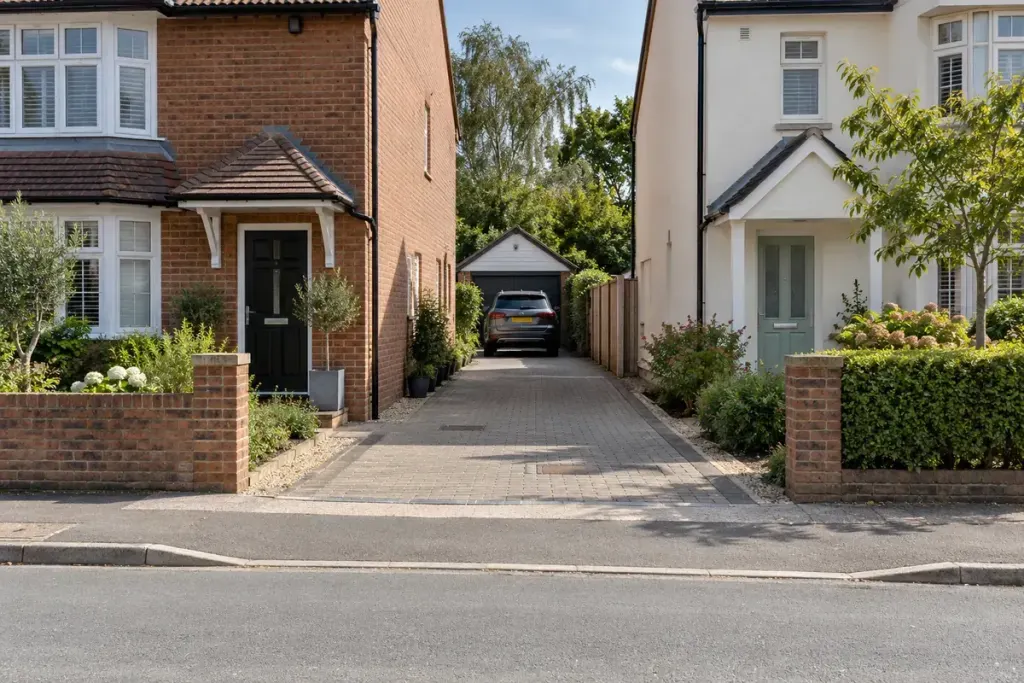
The driveway looks wide enough for both houses. During a viewing, that can feel like the only question worth asking. Yet the space you can see and the rights attached to it are different pieces of a purchase.
Begin with a practical sketch. Mark the road entrance, each garage, gates, parking spaces and the narrowest passing point. Watch how a vehicle would turn without occupying the neighbour’s parking area. Ask whether deliveries, waste collection and larger vehicles use the same route.
Ask for documents behind the daily arrangement
A seller saying that everyone has always used the drive is useful background, but it does not resolve ownership, access rights or repair obligations. Ask your conveyancer or locally qualified property lawyer to identify the relevant recorded documents and explain them for this property.
For an example of jurisdiction-specific documentation, HM Land Registry’s easement guidance explains registration issues in England and Wales. It should not be treated as the rule for Colorado or another country. The transferable habit is to have the actual access arrangement checked under the law where the home stands.
- Which land is included in the sale?
- Who may pass through, and for what purposes?
- Where may residents or visitors park?
- Who arranges repairs, drainage work or snow clearance?
- Are there existing disagreements or proposed changes?
Request copies of any maintenance agreement rather than relying on a verbal description of shared costs. A fair-sounding split can still be unclear about who selects a contractor or authorises an expensive repair.
Return to the sketch once the documents are explained. If the practical route and the documented right do not match, flag the mismatch before committing. You do not need to diagnose the legal problem yourself. Your job as a buyer is to notice the unanswered question and make sure the right professional resolves it.