
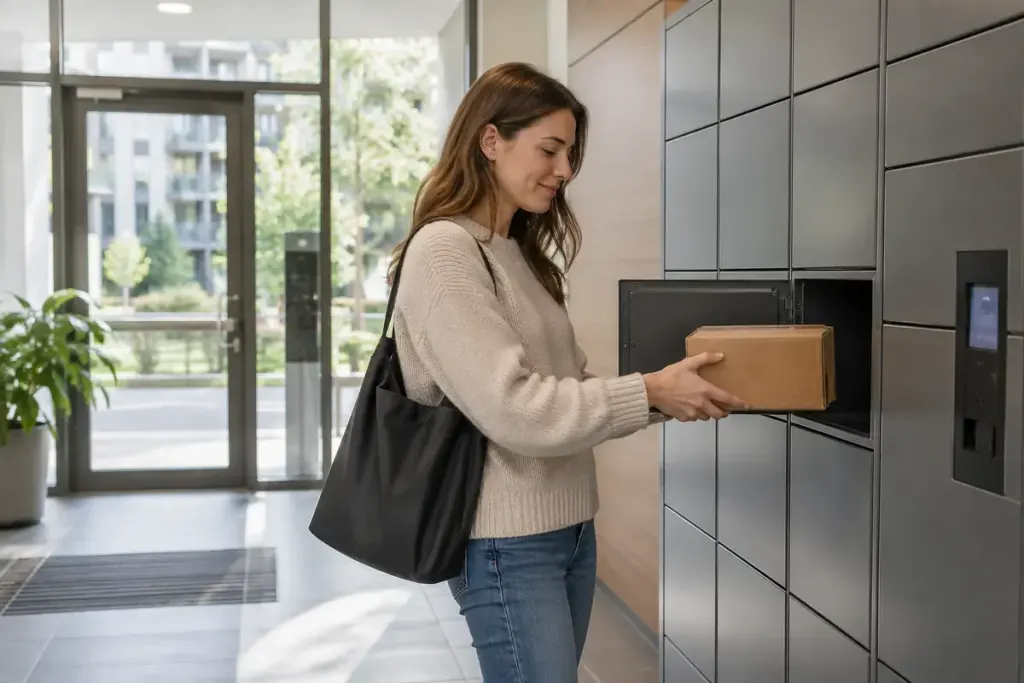
A listing’s promise of convenient apartment living may not explain what happens when a parcel arrives while you are at work. A lobby, locker system, reception desk, and unattended doorstep are different arrangements. Ask how deliveries actually reach residents before assuming the building solves the problem.
During a viewing, identify the official delivery point and the route from there to the apartment. Check the building’s written process with the manager or relevant contact. An agent’s description of what residents usually do may not be the same as an approved arrangement.
Ask about access and collection
Find out whether the service operates at all hours or only when staff are present. Ask how residents are notified, how collection is recorded, and what happens if a locker is full. Confirm whether another household member can collect an item and what identification or authorisation is required.
Do not assume that a room labelled secure guarantees compensation for loss or damage. Read the relevant terms and ask who handles a problem. Security measures and responsibility are related questions, but one does not automatically answer the other.
Test the awkward delivery in your imagination
A large box, temperature-sensitive groceries, or an item requiring a signature may follow a different route from an ordinary parcel. Ask about those cases if they are part of your routine. Also check any restrictions on delivery vehicles, lift access, or leaving goods in shared corridors.
If collection involves stairs or a distant room, consider whether you can manage the items you commonly receive. Keep fire routes and common areas in view; convenience should not depend on storing boxes where they obstruct other residents.
Record the arrangement alongside other practical viewing notes, including any fees and the source of the information. A clear delivery process is a small part of choosing a home, but it can affect everyday use long after the attractive listing photographs have been forgotten.