
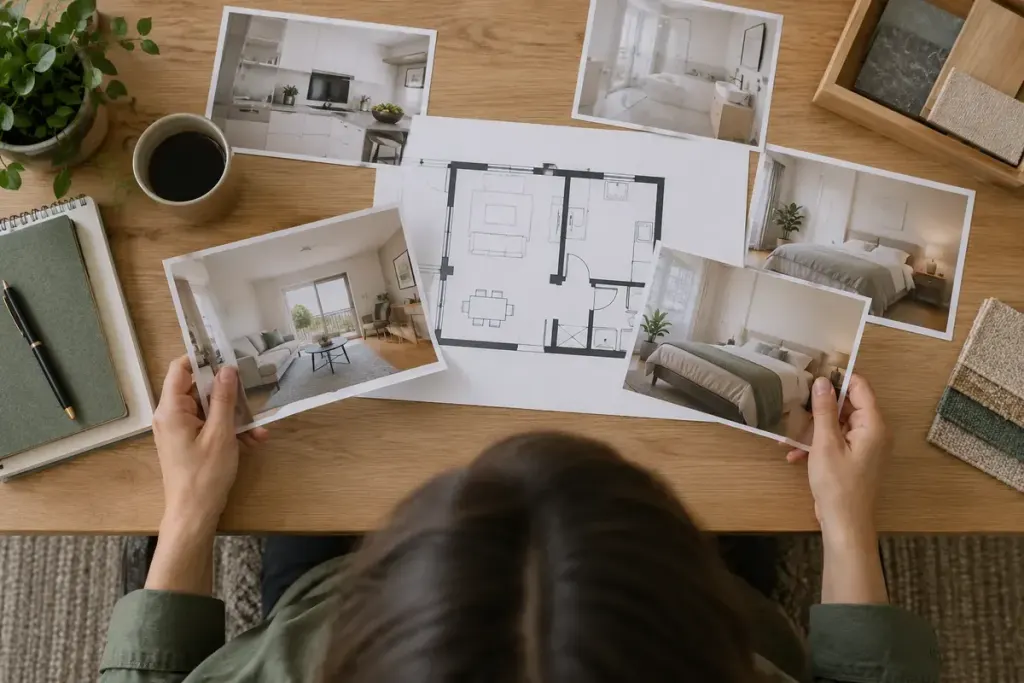
A listing contains twenty photographs, yet you cannot work out where the second bedroom is. Several attractive angles of one living room can create the impression of a complete tour without showing every space.
Before arranging a viewing, make a simple photo map. The purpose is not to diagnose the building from pictures. It is to identify what the listing actually shows and what still needs an answer.
Give each image a room label
Use a copy of the published floor plan if one is available. Mark each room with a simple letter, then list the photograph numbers you believe correspond to it. If the connection is uncertain, write a question mark rather than forcing a match.
Look for repeated features: a distinctive window, a doorway beside a fireplace or the position of a built-in cupboard. These can help connect different angles. Mirrors can complicate the view, so distinguish a reflection from another opening.
Count unique rooms separately from images. Three kitchen photographs still represent one kitchen. An exterior terrace picture may show a shared space rather than a private one; check the caption and ask the agent.
Make absence a question, not an accusation
A missing bathroom photograph could have many explanations. It does not prove a defect. Ask for a current image or include that room in the viewing priorities. Do the same for storage, entrances or outdoor areas that matter to your use of the property.
Check whether images are labelled as rendered, virtually staged or illustrative. Ask what fixtures and finishes are actually included. Furniture shown in an image should not be treated as part of the sale or tenancy without confirmation.
If the plan and photographs seem inconsistent, request clarification using specific references: “Photo 8 appears to show a door where the plan shows a wall.” That is easier to answer than a general statement that the listing feels confusing.
Keep the short map for the visit. You can then replace uncertain labels with observations and ask about changes since the photographs were taken. The listing becomes a starting document for a real conversation rather than a slideshow whose strongest images decide what you notice.