
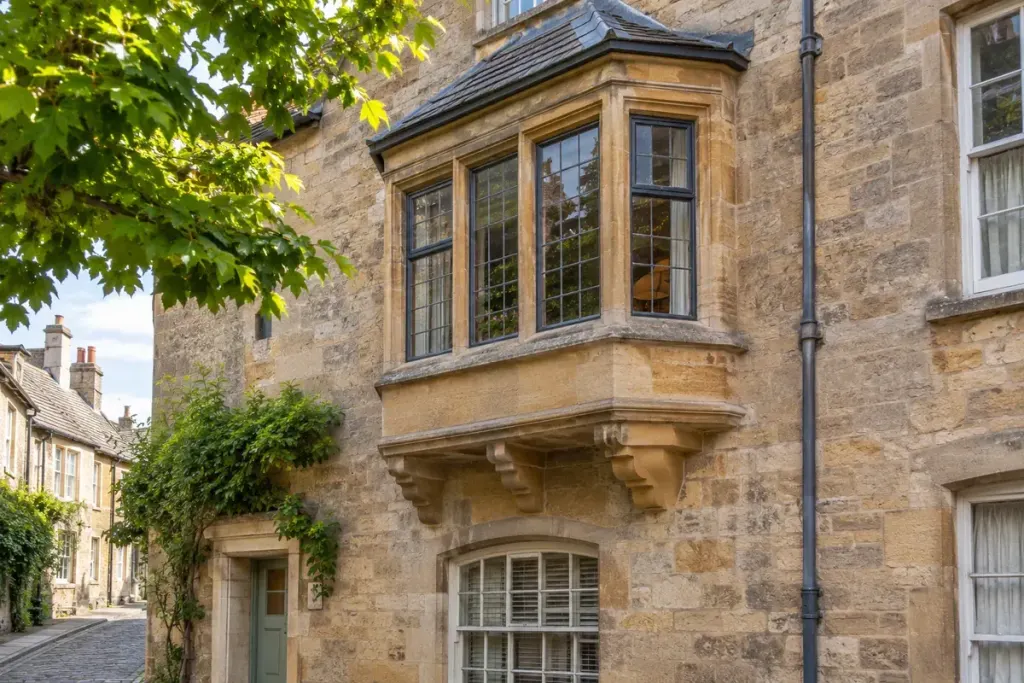
A window projecting from an upper floor can change a room without extending the building all the way to the ground. An oriel is that elevated projection: it may sit on brackets, corbels or another supporting arrangement, with space beneath it.
Historic England’s architectural glossary includes oriel windows among the details worth noticing on a town house. The term helps describe the form, but it does not tell a buyer how a particular window was built or whether its support is sound.
At a viewing, first stand back and look at the whole projection. Is it original to the building, or does it appear to be a later alteration? Where does its small roof meet the main wall? Where would rain leave the roof and sill? These are observation questions, not a diagnosis from the pavement.
Look at the same detail from inside
Inside, notice the floor area created by the projection and how comfortably it can be used. A window seat may be attractive, but the room’s furniture, heating and opening sections still need to work around it. Check whether blinds or curtains can operate without blocking a ventilator or the window handle.
Ask the seller for available records of repairs, replacement glazing and alterations. If the property has heritage protection, ask what permissions were required and which documents support the work. The applicable rules depend on the location and building status.
Turn concerns into a survey question
Staining near the junction, cracking around supports or difficulty operating a sash are details to record for a qualified surveyor. They do not establish the cause or repair cost by themselves. A useful note says where the mark is and includes a photograph taken with permission.
The architectural name makes the conversation more precise. It should lead to better questions about condition, maintenance and use, rather than becoming a reassuring label that replaces inspection.