
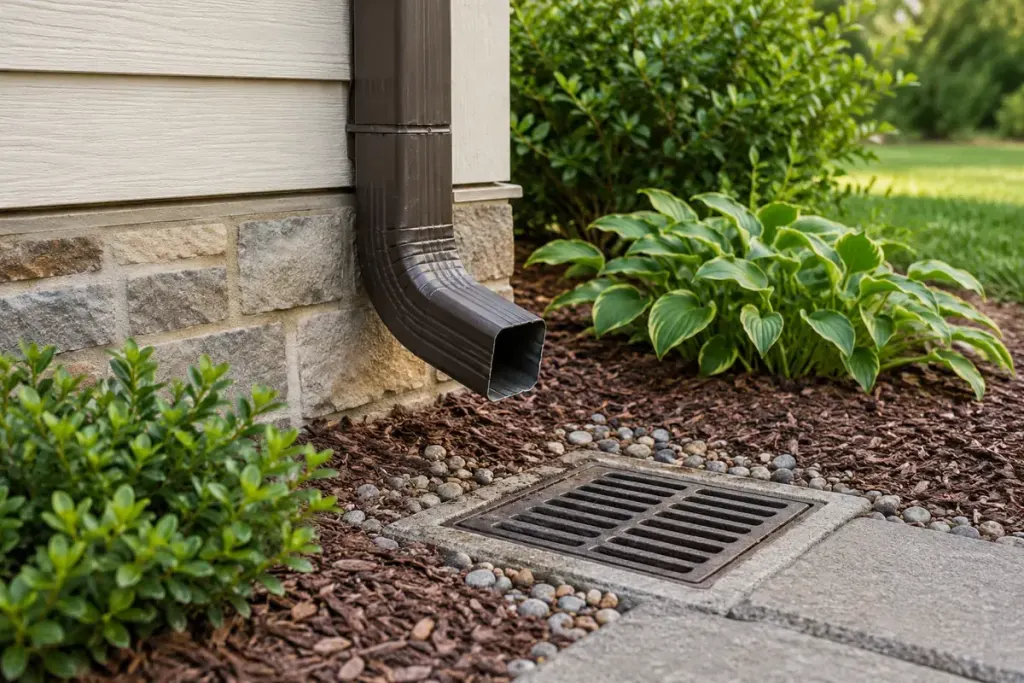
A tidy gutter can distract from a more useful viewing question: where does the collected water go? A downpipe disappearing behind a shrub or into the ground has not explained its destination. Following the visible route can help you prepare better questions for the seller and surveyor.
Walk only in areas you are permitted to access. Stay on the ground; a property viewing is not the time to climb a ladder, remove drain covers or test unfamiliar equipment.
Record what you can actually see
Note whether each visible downpipe ends over a gully, connects to an underground pipe or discharges onto the surface. Look for disconnected joints, staining and obvious debris. Photograph the location with permission so a later question refers to the correct side of the building.
Keep observation separate from diagnosis. A stain does not establish an active leak, and a dry wall does not establish reliable drainage. Weather, recent cleaning and concealed alterations can all affect what a viewing reveals.
Ask about the route beyond the outlet
- Are drainage plans or maintenance records available?
- Have any downpipes, extensions or paved areas been altered?
- Has water collected near the building during heavy rain?
- Who maintains any shared drainage serving neighbouring properties?
Record the answers as statements to verify, not facts proved by the conversation. A qualified surveyor or drainage specialist can advise on further inspection appropriate to that property and local requirements.
If a rainwater butt is present, ask where overflow goes when it is full. A useful container in dry weather still needs a sensible arrangement during prolonged rainfall.
Finish with a short list of unresolved points. “Rear downpipe enters concealed drain; route and maintenance responsibility unconfirmed” gives a professional something specific to investigate. “Drainage looks fine” closes the question before enough evidence exists.