
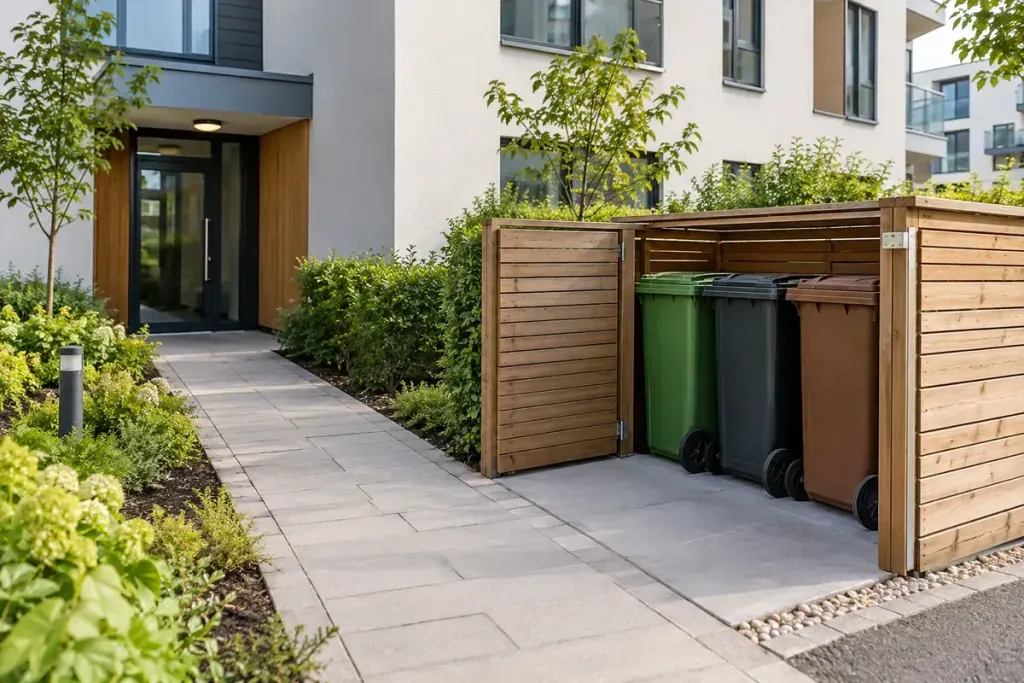
The kitchen has room for a recycling box, but where does its contents go next? A shared bin store can be a short, level walk from an apartment or a surprisingly awkward journey through several doors. That route deserves a place on the viewing checklist.
Follow the whole journey
Ask to see the actual storage area used by the apartment, then walk there from the building entrance. Note steps, heavy doors, narrow turns, lighting and whether a key or access code is required. Consider how the route would work while carrying an ordinary bag, without obstructing communal passages or testing access you have not been given.
A useful viewing note might read: “Bin store across courtyard; two self-closing doors; access arrangements to confirm.” This records practical observations without assuming that a tidy space on viewing day represents every day of the week.
If mobility, lifting or reach is a concern, discuss the available arrangements with the managing agent. A short distance on a site plan does not establish that the route is usable for everyone.
Ask who does what
Find out which materials the building collects, where food waste goes if there is a separate service, and who brings containers to the collection point. Ask who handles missed collections, overflowing bins and damaged locks. Request the current resident guidance rather than relying on a neighbour’s informal explanation.
Clarify how bulky items and move-in packaging are handled. A communal container is not automatically permission to leave furniture beside it. If a separate booking or charge applies, include that in your moving plan.
Connect the outside space with the room inside
Back in the apartment, identify a practical place to separate and temporarily store the accepted materials. Check that the arrangement leaves the kitchen usable and does not depend on keeping bags in an escape route.
One overflowing bin does not explain its cause, but it gives you a specific question to raise. Ask about the normal routine and any unresolved problem. Everyday facilities rarely dominate a listing photograph, yet understanding them can make the first week in a new home considerably easier.