
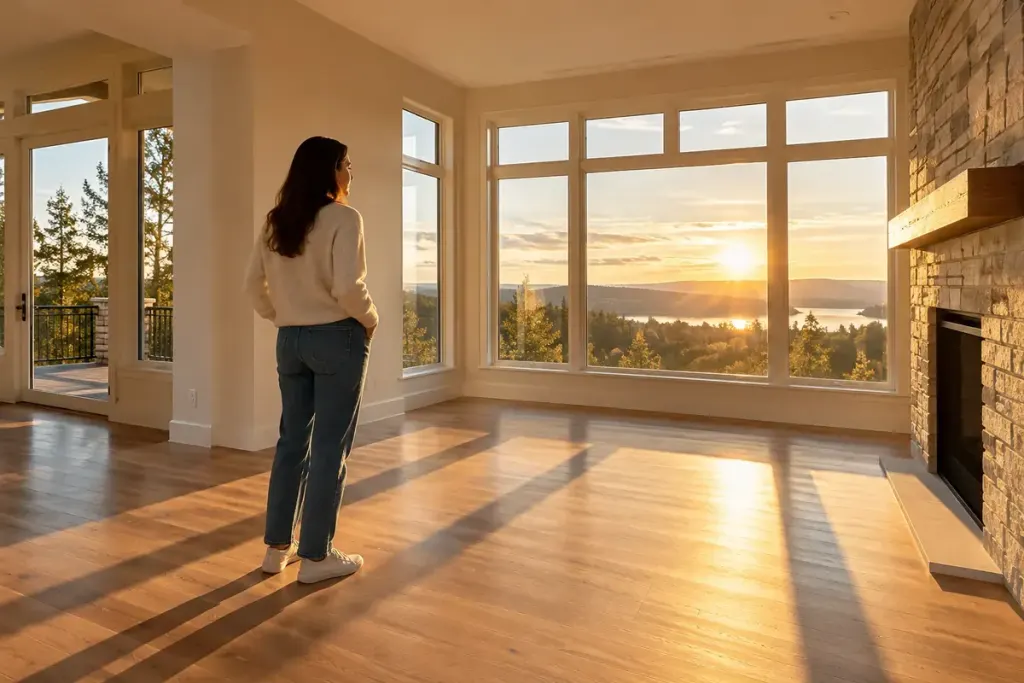
A living room looks beautifully bright during a late-afternoon viewing. That is a useful observation, but it does not describe the room at breakfast or in another season. Window orientation helps explain when direct sunlight is likely to reach it.
The US Department of Energy’s passive-solar design guide discusses orientation alongside room layout, materials and surrounding landscaping. Its US examples should be read in their geographic context; sun paths and heating priorities differ with location and hemisphere.
Put direction and time on the floor plan
Mark the approximate direction of the main windows and the time of the viewing. Note where direct sunlight falls, which rooms receive diffuse daylight and what blocks the view of the sky. Nearby buildings, trees, balconies and overhangs can matter as much as the compass label.
Ask whether you can revisit at a different time. If that is not practical, ask specific questions about the room you will use most: when does sunlight reach the desk, and are blinds regularly needed in the afternoon? Treat the answers as information to investigate, not measurements.
Connect the light to your ordinary activities
Imagine working at a screen beside a west-facing window. Afternoon light might be welcome in winter but create glare at the time you need to work. The useful question is not whether west-facing is universally good or bad; it is how the actual room, shading and schedule fit together.
Do not infer a home’s annual energy use or comfort from orientation alone. Glazing, insulation, ventilation, shading and local climate all contribute. Ask for relevant performance information and professional advice when making an energy assessment.
During the viewing, photograph the room with permission and note whether lights were switched on. Avoid comparing a naturally lit photograph from one home with a heavily lit image from another as though they were equivalent evidence.
A short daylight note can sit beside the floor plan: direction, observation time, obstructions and the activity you expect to do there. It turns an attractive moment during a viewing into a more useful question about living in the space.