
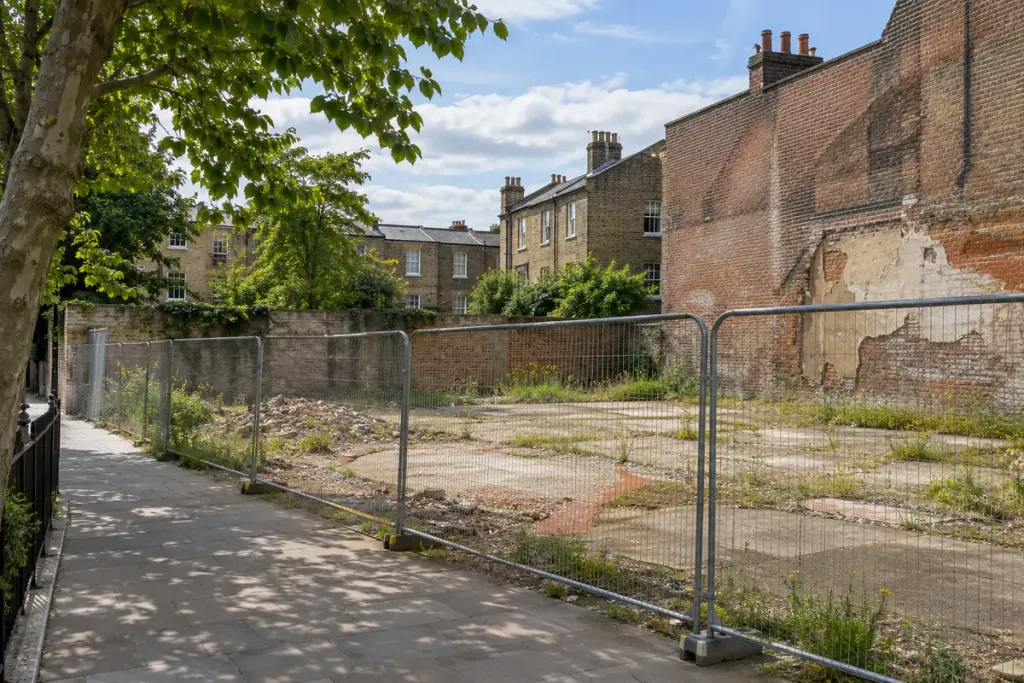
A site appearing on a brownfield land register can sound like a development opportunity already approved. In England, however, the register has distinct parts, and inclusion in one does not mean the same thing as inclusion in the other.
The government’s brownfield land register guidance explains the framework. Part 1 identifies land meeting the relevant criteria. Entry in Part 2 can grant permission in principle through the prescribed process. Part 1 inclusion alone does not automatically produce that permission.
Read the entry, then the planning history
Start with the site’s reference and boundary. Confirm which part of the register contains it and the date of the entry. A promotional map pin is not a reliable substitute for the authority’s mapped site.
Then inspect the actual planning records. A register entry and an existing planning permission may coexist, and a larger site can contain areas with different statuses. Ask the local planning authority or an appropriately qualified planning adviser to explain the relevant documents.
Permission in principle still has a second stage
The government’s permission-in-principle guidance distinguishes that stage from technical details consent. A buyer should not read the words “in principle” as authorisation to begin building without the further requirements being satisfied.
For a comparison sheet, record the land boundary, register part, development parameters, consent dates and unresolved technical matters. Keep ownership, contamination investigations and commercial viability as separate questions; a planning entry does not answer them all.
This article describes the English system. A brownfield label used in Colorado or another jurisdiction may belong to a different regulatory process and should be checked locally.
The useful habit is to replace “the site is on the register” with an exact statement of which entry exists and what legal effect it has. That turns a promising label into a question that can be investigated before money is committed.