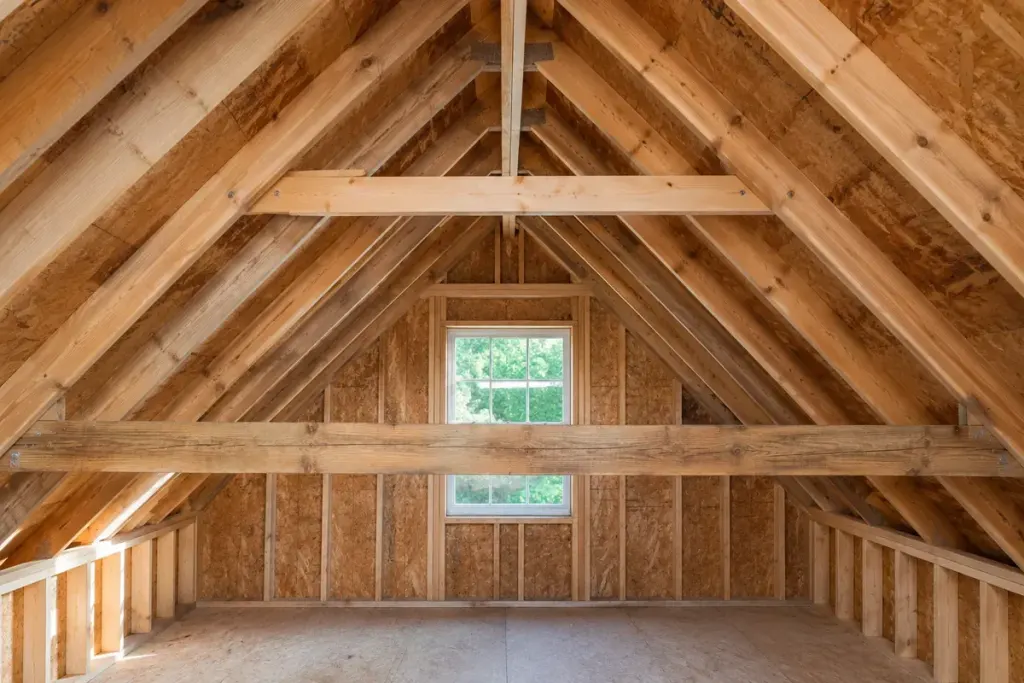
Two horizontal pieces of timber in an attic may look like duplicates from the hatch. Their height and connections can tell a different story. In conventional roof framing, a rafter tie and a collar tie have distinct structural roles, so neither should be treated as spare timber when imagining a loft conversion.
The American Wood Council explains that rafter ties sit in the lower third of the attic space and resist the outward thrust produced by gravity loads on the roof. Collar ties are in the upper third and address separation near the tops of opposing rafters under uplift in the relevant ridge-board arrangement.
A useful observation, not a structural verdict
At a viewing, the practical question is not simply “Are there horizontal timbers?” Ask what roof system is present and whether the survey will assess the visible connections. Ceiling joists may perform a tying role in some arrangements; a structural ridge beam changes how loads are supported. A photograph alone may hide the details that matter.
For example, a seller might describe an attic as easy to open up because a few low timbers are “only in the way.” Record that as a proposed alteration requiring assessment, not as evidence that the members are unnecessary. The same caution applies when older work has already moved or cut them.
Keep a clear survey question
Ask the surveyor to distinguish what was visible, what was inaccessible, and whether a structural engineer should review a proposed change. If documents describe a conversion or repair, request the relevant plans and approvals through the normal purchase process.
The names are useful because they make that conversation precise. They do not establish compliance with local rules, identify every hidden defect, or tell a buyer which timber can be removed. Roof forms and requirements differ between places and buildings.
You do not need to climb into an unsafe or unboarded attic to collect better evidence. A safe viewing, a note of the concern, and a properly scoped inspection are more valuable than an unsupported conclusion based on a quick look through the hatch.