
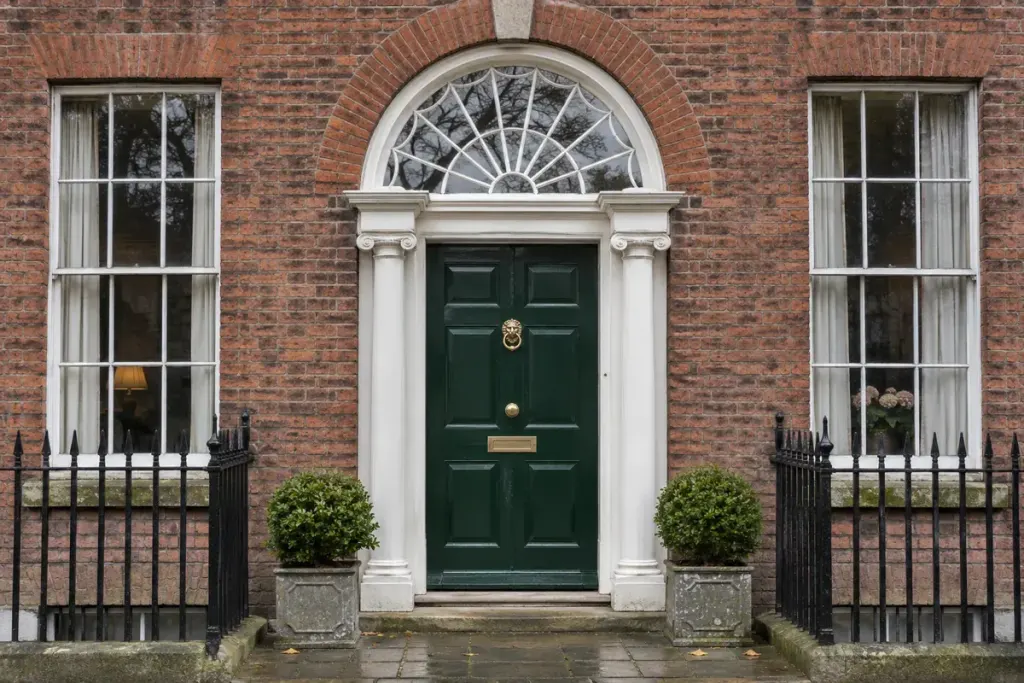
At a house viewing, the front door tends to receive attention at eye level: paint, locks and hardware. Look above it too. A glazed panel there can bring daylight into an entrance hall even when the door is closed, changing the first impression of a compact interior.
A fanlight is often associated with a semicircular form and radiating glazing bars, although historic examples vary. Historic England’s guide to Meard Street describes fanlights appearing over Georgian doors to admit light to the hall, with designs becoming more elaborate over time. That history is a useful starting point for noticing the feature, not a method of dating an entire house from one window.
Look from both sides
Outside, notice how the glazing relates to the door frame and surrounding masonry. Inside, stand where a visitor would enter. Does the panel actually light the hall, or is much of it obscured by a canopy, foliage or an internal covering? A photograph taken from the pavement may not answer that question.
Visible cracks, staining or damaged glazing bars are reasons to ask for closer assessment. They are not enough to diagnose the cause yourself. An attractive painted finish can also make it difficult to judge the underlying condition during a short visit.
Questions worth carrying forward
Ask whether the panel is original, repaired or a later replacement, and whether any documentation is available. If changes are planned, establish what permissions or conservation requirements apply locally before ordering glass or altering the frame. Rules depend on the property and jurisdiction.
For a viewing note, separate appearance from unresolved work: “daylight reaches the hall; glazing condition needs checking” is more useful than “beautiful original entrance.” It preserves what you actually observed while leaving age, condition and repair scope to the appropriate evidence. The fanlight then becomes part of an informed property assessment, rather than merely a pleasing photograph.