
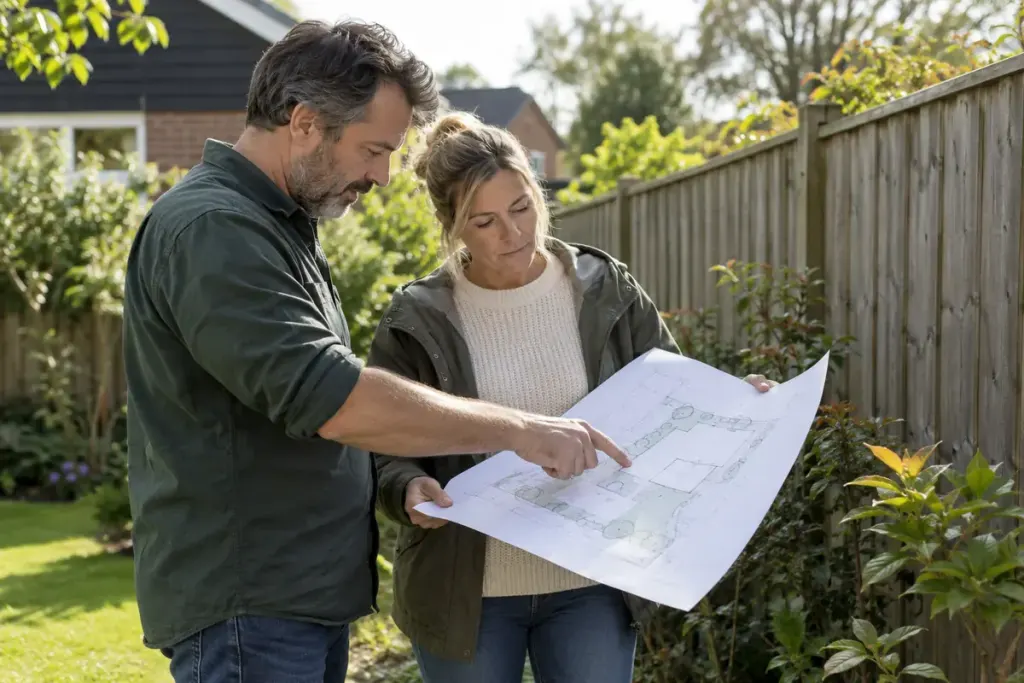
A fence makes a garden look neatly defined. It does not, by itself, prove exactly where one owner’s land ends and another’s begins. A structure may sit along a boundary, beside it, or in a position that changed during an earlier repair.
HM Land Registry’s boundary guidance explains this distinction for England and Wales. Its title plans generally show general boundaries, and a visible fence is not conclusive evidence of the precise legal line. Other jurisdictions have different records and procedures, so the example should not be treated as a rule for every property market.
Turn the observation into a document question
During a viewing, note the feature and ask what supports the seller’s description of it. Relevant material may include deeds, a survey, a recorded agreement or correspondence about past work. Ask the appropriate local property professional which records establish what in that location.
Keep ownership, position and maintenance responsibility separate. “We replaced those panels” answers a question about work someone carried out; it may not settle who owns the feature or where a legal boundary lies. Similarly, a neat red line on a small-scale plan should not become a millimetre measurement taken from a screen.
Before changing anything
If you are considering moving or replacing a fence, first clarify the records, local requirements and any neighbour agreement needed. Do not use an uncertain photograph or an assumption about which way the posts face as permission to alter the shared edge.
A practical enquiry can be brief: identify the stretch of fence on a dated photograph, describe the proposed work and list the documents available. Leave conclusions to the relevant evidence and professional advice. That is more useful than beginning with a confident claim that later turns out to rest only on the current appearance of the garden.