A recently renovated house can make a powerful first impression.
The walls are freshly painted. The flooring looks new. The kitchen has modern cabinets, clean countertops, and updated fixtures. Bathrooms feel brighter, lighting looks contemporary, and nearly every room appears ready for photographs.
Compared with a dated property down the street, the renovated home may immediately feel like the safer choice.
After all, someone has already done the work.
Or have they?
One of the biggest mistakes buyers can make is assuming that a recently renovated home is automatically a well-maintained home.
Those are not the same thing.
Renovation describes change. Maintenance describes how well a property and its systems have been cared for over time.
Sometimes they overlap.
Sometimes they do not.
A house can receive thousands of dollars in visible improvements while important systems beneath those finishes remain old, damaged, improperly repaired, or close to the end of their useful lives.
That does not mean renovated homes should be avoided. Many renovations genuinely improve both appearance and function.
However, buyers should learn what to check when buying a renovated house rather than allowing new finishes to substitute for proper evaluation.
The most important question is not simply, “What looks new?”
It is:
What was actually improved, and what is still hiding underneath?
Renovated Does Not Automatically Mean Updated
The word “renovated” can describe an enormous range of work.
One property may have undergone extensive improvements involving electrical systems, plumbing, roofing, insulation, HVAC equipment, windows, drainage, structural repairs, and interior finishes.
Another may have received new flooring, paint, cabinet doors, appliances, light fixtures, and bathroom hardware.
Both houses might be advertised as renovated.
Yet their underlying condition could be completely different.
That distinction matters because the most visually impressive improvements are not always the most important ones.
A beautiful backsplash is easy to notice.
A deteriorating drain line is not.
New flooring creates an immediate visual impact.
A poorly performing roof may remain invisible until weather exposes the problem.
Therefore, buyers should treat “renovated” as the beginning of a conversation rather than proof of condition.
Cosmetic Renovation Can Be Extremely Convincing
Cosmetic work is not inherently bad.
Fresh paint, updated flooring, improved lighting, and modern cabinetry can genuinely make a home more enjoyable.
The problem arises when buyers interpret cosmetic improvements as evidence that everything else received similar attention.
A polished interior creates what could be called a halo effect.
Because one part of the house looks excellent, the entire property begins to feel excellent.
You walk into a bright kitchen and immediately imagine living there.
The emotional response is understandable.
However, houses are systems.
What you see on the surface represents only part of the property.
Behind walls, beneath floors, above ceilings, and outside the living space are components that may have received little or no attention during the renovation.
Start by Asking What Was Actually Renovated
Instead of asking whether the house was renovated, ask for specifics.
Which rooms were changed?
Were walls moved?
Was plumbing relocated?
Was electrical work performed?
Were windows replaced?
Was the roof changed?
Was HVAC equipment installed or updated?
Did the project involve structural modifications?
Was the basement finished?
Were bathrooms completely rebuilt or simply refreshed?
Specific questions transform a vague marketing description into useful information.
The goal is not to interrogate the property owner.
It is to understand the scope of work.
A house with a remodeled kitchen and bathrooms may still have many original systems.
That is not automatically a problem.
You simply need to know what you are evaluating.
New Paint Can Hide More Than an Old Color
Fresh paint is one of the most common renovation improvements because it quickly changes how a room feels.
Usually, new paint is exactly what it appears to be: a cosmetic upgrade.
Still, buyers should pay attention to what surrounds it.
Look at ceilings.
Check corners.
Examine areas around windows.
Observe walls near plumbing fixtures.
Look inside cabinets beneath sinks.
Signs of moisture problems may include staining, bubbling surfaces, warped materials, unusual discoloration, or deterioration.
A freshly painted wall does not prove that moisture exists.
It also does not prove that moisture does not exist.
If one small section appears noticeably newer than the surrounding area, it may be worth asking why it was repaired.
Follow Your Nose as Well as Your Eyes
Visual inspection receives most of the attention during a showing.
Smell can provide additional information.
Persistent musty odors may justify further investigation for moisture.
Strong fragrances can simply reflect cleaning products or air fresheners, but if a property relies heavily on scent, take time to notice what the home smells like in less staged areas.
Basements, utility rooms, closets, crawl spaces, and areas beneath sinks can provide a different impression from the main living room.
Again, an unusual odor does not automatically diagnose a specific problem.
It is a signal to investigate rather than assume.
New Flooring Does Not Tell You What Is Underneath
New floors can dramatically improve a house.
They can also make it difficult to see the previous condition of the surface below.
Walk slowly through the property.
Do floors feel unusually uneven?
Are there noticeable slopes?
Do sections flex underfoot?
Are transitions between rooms awkward?
Do doors appear to rub or close strangely near certain areas?
Some variation is normal, especially in older homes.
However, significant irregularities may deserve closer examination.
The key is not to diagnose structural problems yourself during a showing.
Instead, recognize when something should be evaluated by an appropriate professional.
Look Closely at the Quality of Installation
A renovation can use attractive materials and still suffer from poor workmanship.
Small details often reveal how carefully work was completed.
Look at flooring edges.
Inspect trim.
Check caulking around fixtures.
Open cabinet doors and drawers.
Examine tile alignment.
Look at transitions between different materials.
Check whether doors close smoothly.
Notice gaps around fixtures and finishes.
A minor cosmetic imperfection does not necessarily make a house a bad purchase.
However, numerous rushed details can raise a broader question:
If the visible work was completed carelessly, how carefully was the hidden work performed?
That question becomes especially important when the renovation involved electrical, plumbing, waterproofing, or structural changes.
A Beautiful Kitchen Does Not Tell You the Condition of the Plumbing
Kitchen renovations attract attention because they are highly visible and often expensive.
New cabinets, countertops, sinks, faucets, and appliances can completely transform the room.
Yet a new faucet can still connect to older plumbing.
A new sink does not mean the drain system was replaced.
New appliances do not tell you anything about pipes elsewhere in the house.
Look beneath the sink.
Check for active moisture, staining, swelling, or deterioration in the cabinet material.
Run the faucet if appropriate during the inspection process.
Observe drainage.
The kitchen should be evaluated both as a finished room and as part of the home’s plumbing system.
Bathrooms Deserve Even More Attention
Bathrooms combine water, plumbing, ventilation, electrical fixtures, and waterproofed surfaces in a relatively small area.
That makes renovation quality especially important.
A newly tiled shower can look excellent.
However, the critical waterproofing work sits behind the tile where buyers cannot easily see it.
Similarly, a new vanity can conceal older supply or drain components.
Pay attention to ventilation.
Look for signs of persistent moisture.
Check the condition around tubs, showers, toilets, and sinks.
Observe whether finishes appear properly sealed.
If a bathroom was substantially rebuilt, documentation about the work may be particularly useful.
Water problems often become expensive because damage can spread before it becomes obvious.
Do Not Let New Appliances Distract From the House
A kitchen full of shiny appliances can make a property feel modern.
Remember that appliances are replaceable objects.
The house itself is the larger purchase.
A refrigerator can be changed.
A range can be replaced.
A dishwasher can be upgraded.
Correcting major drainage, electrical, structural, or roofing problems can be much more disruptive.
Therefore, avoid assigning too much value to items that create immediate visual appeal but represent only a small part of the property’s long-term condition.
This does not mean appliances are irrelevant.
It means they should not dominate your evaluation.
Check the Electrical System, Not Just the Fixtures
New pendant lights and recessed lighting can make an older home feel significantly newer.
However, fixtures are only the visible end of an electrical system.
If extensive electrical work was part of the renovation, buyers should understand what changed.
Was wiring updated?
Was the electrical panel replaced or modified?
Were new circuits added?
Did the kitchen renovation require changes for appliances?
Were additional outlets installed?
Do outlets and switches appear secure and properly finished?
A home inspection can help identify visible concerns, while more specialized evaluation may be appropriate when significant issues arise.
The important lesson is simple:
Modern light fixtures do not automatically mean a modern electrical system.
Look at the Electrical Panel
The electrical panel may not be as exciting as the kitchen.
It can still tell you useful things about the property.
A professional inspector can evaluate its condition more meaningfully, but buyers can at least note where it is located and whether it appears to have been part of the renovation.
If the listing emphasizes major modernization but important infrastructure appears untouched, ask questions.
There may be a perfectly reasonable explanation.
Perhaps the system was already adequate.
Perhaps the renovation did not require substantial electrical work.
The goal is not to assume something is wrong.
It is to avoid assuming everything was upgraded.
Plumbing Improvements Need the Same Scrutiny
Renovations often involve replacing visible plumbing fixtures.
The hidden supply and drainage systems may be a different story.
Ask whether plumbing lines were moved or replaced.
If walls were opened during the renovation, find out whether aging components were addressed.
Observe water pressure at fixtures during appropriate inspection stages.
Look for slow drainage or unusual behavior.
Check accessible areas for signs of previous leakage.
Plumbing problems can be inconvenient because they frequently affect finished areas around them.
A small hidden leak can damage cabinets, flooring, drywall, or framing before anyone notices.
The Roof May Have Nothing to Do With the Interior Renovation
Walk into a newly renovated home and your attention naturally stays inside.
The roof does not care how beautiful the interior looks.
If it is aging or damaged, it remains a major building component that deserves evaluation.
Ask about its approximate age and known work.
Look for obvious exterior concerns where visible.
Inside the attic, if accessible during an inspection, professionals may look for evidence related to leakage, ventilation, insulation, or previous repairs.
Roof condition can affect much more than future replacement costs.
Water intrusion can damage other parts of the building.
A newly remodeled interior therefore makes roof evaluation more—not less—important because fresh finishes can make previous interior evidence harder to recognize.
Do Not Forget Gutters and Drainage
Water should move away from a house.
That sounds obvious, yet exterior drainage is easy to overlook when buyers are focused on interior finishes.
Observe gutters and downspouts.
Where does water appear likely to discharge?
How does the ground slope near the foundation?
Are there low areas where water could collect?
Does landscaping direct water toward or away from the structure?
Drainage problems do not always announce themselves during a dry showing.
That is why understanding the surrounding site matters.
A beautiful renovation cannot compensate for persistent water management problems around the property.
The Basement Can Tell a Different Story From the Main Floor
Finished living areas are usually staged carefully.
Utility spaces often reveal more about the property’s history.
If the house has a basement, examine it closely.
Look at accessible foundation surfaces.
Notice unusual staining.
Pay attention to odors.
Observe mechanical equipment.
Check areas around floor drains or utility penetrations.
If part of the basement has recently been finished, ask what work was done before walls and flooring were installed.
A finished basement can add valuable living space.
However, finishing materials can also make certain areas less accessible for visual evaluation.
Crawl Spaces Should Not Be Ignored
Few buyers are excited about crawl spaces.
Nevertheless, they can contain important information about moisture, plumbing, insulation, ventilation, and the underside of the floor structure.
Access may be difficult, dirty, or inappropriate during a casual showing.
That is exactly why a professional inspection matters.
Do not assume that because the rooms above look newly renovated, the space below them received equal attention.
Homes function vertically as well as horizontally.
Problems underneath a finished floor can eventually affect the space above.
HVAC Equipment Is Easy to Forget When the House Feels Comfortable
During a pleasant showing, the indoor temperature may feel perfect.
That does not tell you the entire condition of the heating and cooling system.
Ask about equipment age.
Look for maintenance information where available.
Understand which systems serve the home.
If equipment is older, that does not automatically mean immediate replacement is necessary.
Age is only one factor.
Condition, maintenance, installation quality, and performance also matter.
Still, buyers should account for major mechanical systems when thinking about future ownership costs.
A renovated kitchen may last for years, but an aging furnace or air-conditioning system can become a more immediate expense.
Windows Can Look Newer Than They Are
Fresh trim and paint can make windows blend beautifully into a renovated room.
Check how they actually function.
Where appropriate, open and close accessible windows.
Do they move smoothly?
Do locks operate?
Are there visible signs of moisture or deterioration around frames?
Do you notice damaged seals or unusual condensation between panes?
Window condition affects comfort, operation, and potentially energy performance.
Again, the goal is not to declare every older window defective.
It is to distinguish visual renovation from functional condition.
Doors Can Reveal Alignment Issues
Interior doors are surprisingly useful during a walkthrough.
Open and close several.
Notice whether they latch normally.
Check whether they swing unexpectedly when partially open.
Look at gaps around frames.
A single sticky door may simply need adjustment.
Multiple doors behaving strangely can justify closer evaluation.
Exterior doors deserve similar attention because they also interact with weather sealing and security.
Small observations do not provide a diagnosis by themselves.
They help identify questions for inspection.
Fresh Landscaping Can Also Be Cosmetic
Curb appeal matters.
New mulch, decorative plants, clean edging, and a freshly maintained lawn can make the property feel carefully managed.
Look beyond the presentation.
Are shrubs planted extremely close to the structure?
Does soil appear piled high against exterior materials?
Where does irrigation send water?
How does the yard slope?
Are large trees positioned near the home?
Landscaping should complement water management rather than work against it.
A yard can look beautiful while still creating maintenance challenges.
Check Decks, Porches, and Exterior Stairs
Outdoor living spaces are often included in renovation projects because they add immediate visual appeal.
Inspect them as functional structures.
Does the surface feel stable?
Are railings secure?
Do stairs feel consistent?
Are there signs of deterioration at visible connections?
Does water appear able to drain rather than collect?
Paint and stain can refresh the appearance of older materials.
They do not automatically correct deterioration beneath the coating.
If a deck or porch raises concerns, professional evaluation can help determine whether the issue is cosmetic or more significant.
Garage Improvements Can Distract From Basic Function
A freshly coated garage floor and painted walls look clean.
Check the practical elements too.
Observe the garage door.
Look at visible framing and surfaces.
Consider drainage where relevant.
Notice penetrations between the garage and living areas.
If mechanical equipment is located there, include it in the inspection.
A garage is easy to treat as secondary space.
However, it remains part of the property and may contain important systems.
Renovations That Move Walls Deserve Questions
Removing a wall can create the open floor plan many buyers want.
However, not every wall is merely decorative.
Some walls play structural roles.
If a major renovation substantially changed the layout, ask about the work.
Were structural modifications involved?
Was engineering required?
Were beams or supports installed?
Was the work permitted where required?
You do not need to become a structural engineer to buy a house.
You simply need to recognize when a project went beyond paint and flooring.
The more significant the modification, the more valuable documentation can become.
Permits Can Help Explain the Renovation History
Permit requirements vary by jurisdiction and type of work.
Therefore, buyers should avoid assuming that every renovation project requires the same paperwork.
Still, substantial electrical, plumbing, structural, mechanical, or building work may involve permits and inspections depending on local requirements.
When relevant, ask what permits were obtained.
Documentation can help clarify the scope and timing of the work.
However, permits should not replace a property inspection.
A permitted project and a current condition assessment answer different questions.
Use documentation as one part of due diligence rather than treating it as a guarantee.
Ask Who Performed the Work
Renovations may be completed by homeowners, general contractors, specialized tradespeople, or combinations of several parties.
Knowing who performed significant work can provide useful context.
For major systems, ask whether licensed professionals were involved where required.
If warranties exist, determine whether they transfer to a new owner.
Receipts, invoices, manuals, and contractor information can also be valuable after purchase.
You may never need them.
Still, a well-documented renovation gives you a clearer history than a vague statement that “everything was redone.”
Timing Can Tell You Something About the Project
Ask when the renovation occurred.
A renovation completed several years ago has already experienced normal use and seasonal changes.
If something was installed incorrectly, symptoms may have had time to appear.
A renovation finished immediately before listing provides less history.
That does not make recent work suspicious.
Many sellers renovate shortly before a sale for perfectly normal reasons.
However, very recent work means buyers have less evidence about how those improvements perform over time.
That makes careful inspection particularly useful.
Be Careful With the Phrase “Everything Is New”
“Everything” is a big word.
When you hear it, translate it into specific components.
New roof?
New electrical wiring?
New panel?
New supply plumbing?
New drain lines?
New HVAC?
New windows?
New insulation?
New appliances?
New cabinets?
New flooring?
New bathrooms?
The phrase may simply mean that most visible finishes are new.
Clarification prevents buyer and seller from using the same word to mean very different things.
A Flip Is Not Automatically a Bad House
Renovated properties purchased and improved for resale often attract suspicion.
It is important not to make assumptions based solely on the business model.
Some renovation projects are carefully planned and professionally executed.
Others prioritize speed and visible appeal.
The same variation exists in owner-occupied renovations.
Therefore, evaluate the property and documentation rather than relying on labels.
The relevant questions remain the same.
What was changed?
How was it done?
What condition are the remaining systems in?
What does the inspection reveal?
Inspection Is Still Important for a Renovated Home
A common psychological trap is thinking that a renovated house needs less inspection because everything looks new.
In reality, renovation creates additional questions.
Were new systems installed correctly?
Were old problems actually corrected?
Did modifications create new issues?
Are there hidden components that remained untouched?
A professional home inspection provides an independent look at accessible components and systems.
No inspection can reveal everything hidden inside a building.
Still, skipping inspection simply because a property looks fresh removes an important layer of information.
New Construction and Renovation Can Both Have Defects
“New” and “correct” are different concepts.
A brand-new installation can still have workmanship problems.
A ten-year-old installation can function perfectly well.
Age matters, but installation quality and condition matter too.
This principle helps buyers avoid two opposite mistakes.
Do not reject every older component solely because it is old.
Likewise, do not automatically trust every new component solely because it is new.
Evaluate what is actually there.
Watch for Inconsistency Between Rooms
A renovation can reveal clues through inconsistency.
One bathroom may be completely rebuilt while another remains mostly original.
One section of flooring may feel different.
A particular ceiling may have newer paint.
Some outlets may appear updated while others do not.
None of these details automatically indicates a problem.
However, differences can help you understand the renovation sequence.
Ask what happened in those areas.
Sometimes the answer is simple design preference.
Other times, it reveals that work occurred in stages or in response to a specific issue.
Do Not Forget the Attic
The attic is rarely featured in listing photographs.
It can still be important.
When accessible, inspectors may evaluate visible roof framing, insulation, ventilation, moisture evidence, and other conditions.
If a house has undergone extensive interior renovation, attic conditions may help provide a broader picture of the building.
For example, beautiful ceilings below do not tell you whether ventilation above them is appropriate.
Once again, visible finishes and building performance are separate categories.
Both deserve attention.
Energy-Efficient Appearance Does Not Guarantee Energy Performance
New windows, modern thermostats, LED lighting, and updated appliances can create an energy-efficient impression.
Actual performance depends on the entire building.
Insulation, air leakage, ductwork, equipment efficiency, orientation, window installation, and many other factors contribute.
Therefore, avoid judging efficiency from visible technology alone.
If energy performance is important to your purchase decision, seek appropriate information rather than relying on appearance.
A smart thermostat cannot compensate for every weakness elsewhere in the building envelope.
Look Beyond the Staging
Renovated homes are often staged effectively.
Furniture defines rooms.
Artwork adds warmth.
Lighting creates atmosphere.
Decor distracts from empty spaces.
Staging is useful because it helps buyers imagine living in the property.
However, it can also direct attention.
During a second walkthrough, mentally remove the furniture.
Look at walls behind large pieces where possible.
Notice floor areas.
Observe window placement.
Consider storage.
Check traffic flow without focusing on decor.
You are buying the property, not the staging.
Visit More Than Once When Possible
A first showing often produces an emotional reaction.
A second visit can be more analytical.
Once you already know the layout, you can spend less mental energy imagining furniture placement and more time observing details.
Different times of day may also reveal different characteristics.
Natural light changes.
Traffic or neighborhood activity may differ.
Mechanical systems may operate under different conditions.
One visit cannot always provide the full experience of a property.
When circumstances allow, another look can help separate initial excitement from practical evaluation.
Weather Can Reveal Things a Sunny Day Does Not
A clear day makes home shopping pleasant.
Rain can provide different information.
You may observe how gutters handle water.
Drainage patterns become more visible.
Exterior low spots may reveal themselves.
Interior moisture concerns may become easier to notice.
Obviously, buyers cannot schedule weather.
Still, if conditions change between visits, use the opportunity.
A property is not only a fair-weather environment.
It needs to perform through changing seasons and conditions.
Review the Seller’s Disclosures Carefully
Available disclosure requirements vary by location and transaction.
When disclosure documents are provided, read them rather than treating them as routine paperwork.
Look for information about previous repairs, water issues, structural work, mechanical systems, or other known conditions.
Then compare that information with what you observed.
If something is unclear, ask questions through the appropriate transaction channels.
Documents do not replace inspection.
However, they can provide historical context that a visual walkthrough cannot.
Think About the Cost of What Was Not Renovated
Buyers naturally calculate the value of improvements already completed.
Also consider the remaining components.
Suppose the kitchen and bathrooms are new, but the roof, HVAC, windows, and other systems are older.
Those items may continue functioning for years.
Still, future ownership costs should be part of your financial planning.
A renovated property does not eliminate maintenance.
It changes the maintenance profile.
Knowing what remains helps you prepare realistically rather than assuming the first several years will be expense-free.
Separate Immediate Defects From Future Maintenance
Not every older component is a defect.
This distinction matters.
A functioning system may simply be older and eventually require replacement as part of normal homeownership.
Another component may have an active problem requiring attention sooner.
Buyers should avoid treating these categories as identical.
Inspection findings can help create a more nuanced picture.
Ask:
What requires action?
What should be monitored?
What is simply aging normally?
What may become a future capital expense?
This approach produces better planning than viewing the property as either “perfect” or “bad.”
Build a Post-Purchase Reserve
Even after careful inspection, homeownership includes uncertainty.
Components wear out.
Weather creates damage.
Appliances fail.
Small issues appear.
Therefore, spending every available dollar on the purchase and immediate furnishings can leave little flexibility.
A financial reserve can make routine surprises easier to manage.
This is especially relevant when buying a renovated house because buyers sometimes assume new finishes mean maintenance costs will be minimal.
The house may indeed perform well.
A reserve is still prudent.
Do Not Let the Renovation Premium Replace Due Diligence
Renovated homes often command higher asking prices than comparable properties needing cosmetic work.
That premium may be justified by materials, labor, convenience, and improvements.
However, paying more for renovation makes understanding its quality even more important.
You are not merely buying a different paint color.
You may be paying for the claim that substantial work has already been completed.
Determine what that work actually includes.
Then evaluate whether the property as a whole supports your expectations.
Compare Renovated Homes With Unrenovated Alternatives Carefully
An older-looking house may initially seem less attractive because buyers can immediately see the work it needs.
Ironically, that visibility can sometimes make planning easier.
You know the kitchen is dated.
You know flooring needs replacement.
You know walls need paint.
A renovated property removes those obvious projects but may still contain less visible needs.
This does not make one type of home better than the other.
It means buyers should compare total condition rather than surface appearance.
A dated but well-maintained property and a beautifully renovated property can present very different ownership trade-offs.
Make Your Second Walkthrough Less Emotional
If you love the house during the first visit, use the next opportunity differently.
Do not spend the entire time admiring the kitchen again.
Open what can appropriately be opened.
Look under sinks.
Examine utility areas.
Notice ceilings.
Walk the perimeter.
Observe drainage.
Check windows and doors.
Review mechanical systems.
Look at the basement, attic access, garage, or crawl-space conditions where appropriate.
Your goal is not to convince yourself that something is wrong.
It is to gather enough information to make a grounded decision.
A Simple Way to Evaluate a Renovated House
Instead of thinking of the property as one object, divide it mentally into layers.
First, consider the visible finishes: paint, flooring, cabinets, counters, fixtures, and decor.
Next, consider the functional systems: plumbing, electrical, heating, cooling, ventilation, windows, and appliances.
Then consider the building structure and envelope: foundation, framing, roof, exterior surfaces, waterproofing, and drainage.
Finally, consider the site: grading, landscaping, driveways, decks, retaining elements, and water movement.
A renovation may improve one layer while leaving another largely unchanged.
Thinking this way makes it much harder for a beautiful kitchen to dominate your entire judgment of the house.
The Best Renovation Is One You Can Understand
Buyers do not need every property to have been rebuilt from the foundation upward.
What they need is clarity.
If a home has a new kitchen but an older roof, that can be evaluated.
If bathrooms were renovated while the original plumbing remains, that can be considered.
If major systems were replaced and documentation exists, that provides useful context.
Uncertainty becomes more problematic when the property looks completely new but nobody can clearly explain what work occurred.
A transparent renovation history makes it easier to distinguish improvements from assumptions.
Conclusion
Understanding what to check when buying a renovated house starts with recognizing one simple fact: new finishes and good property condition are not the same thing.
A recently renovated home can be an excellent purchase.
It can also contain aging systems, unresolved moisture issues, poor workmanship, drainage problems, outdated infrastructure, or repairs that deserve further investigation.
The appearance alone cannot tell you which situation you are looking at.
Start by identifying the actual scope of the renovation.
Then look beyond paint, flooring, countertops, appliances, and fixtures. Consider plumbing, electrical systems, HVAC equipment, roofing, windows, drainage, foundation conditions, attics, basements, crawl spaces, decks, and other parts of the property that may not appear in listing photographs.
Pay attention to workmanship.
Ask about major modifications.
Review available documentation and disclosures.
Use professional inspections rather than assuming recent work eliminates the need for them.
Most importantly, do not approach the property with the goal of finding something wrong.
Approach it with the goal of understanding what you are buying.
A beautiful renovation can add real value, comfort, and convenience.
It simply should not replace due diligence.
When buyers learn to separate what looks new from what was actually improved, they can evaluate renovated homes with much more confidence—and with a clearer picture of the maintenance and ownership costs that may still lie ahead.
Related Posts
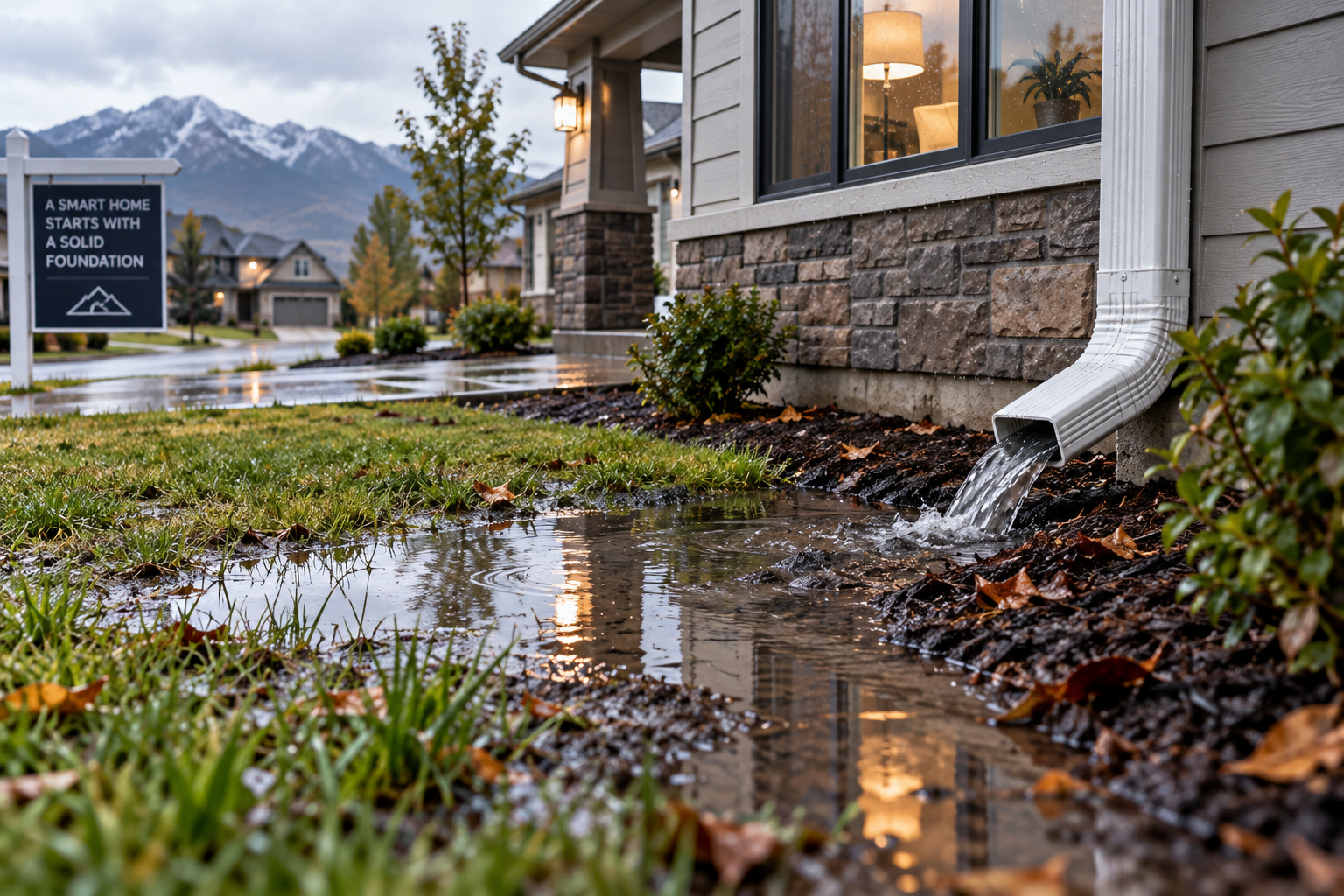
The House Looks Perfect—But What Happens to the Yard After a Heavy Rain?
A house can make an excellent first impression on a…

10 Kesalahan Saat Membeli Rumah Pertama yang Sering Tidak Disadari
Mencari rumah pertama biasanya dimulai dengan hal yang: menyenangkan. Buka…

Panduan Investasi Properti Pertama Kali untuk Pasangan Muda
Membangun kehidupan bersama bukan hanya tentang merencanakan pernikahan atau mengatur…